Finding the Right OEM China Switch Socket Company: What Should You Look For?
Are you struggling to find a reliable OEM switch and socket manufacturer in China? Many buyers face challenges with quality and consistency when sourcing these products. I understand your concerns and want to help you make informed decisions.
The best OEM China switch socket companies prioritize consistent quality, transparency in materials, and robust manufacturing processes. They offer competitive pricing but never at the expense of crucial components like plastic grades and pure copper parts, ensuring product longevity and safety.
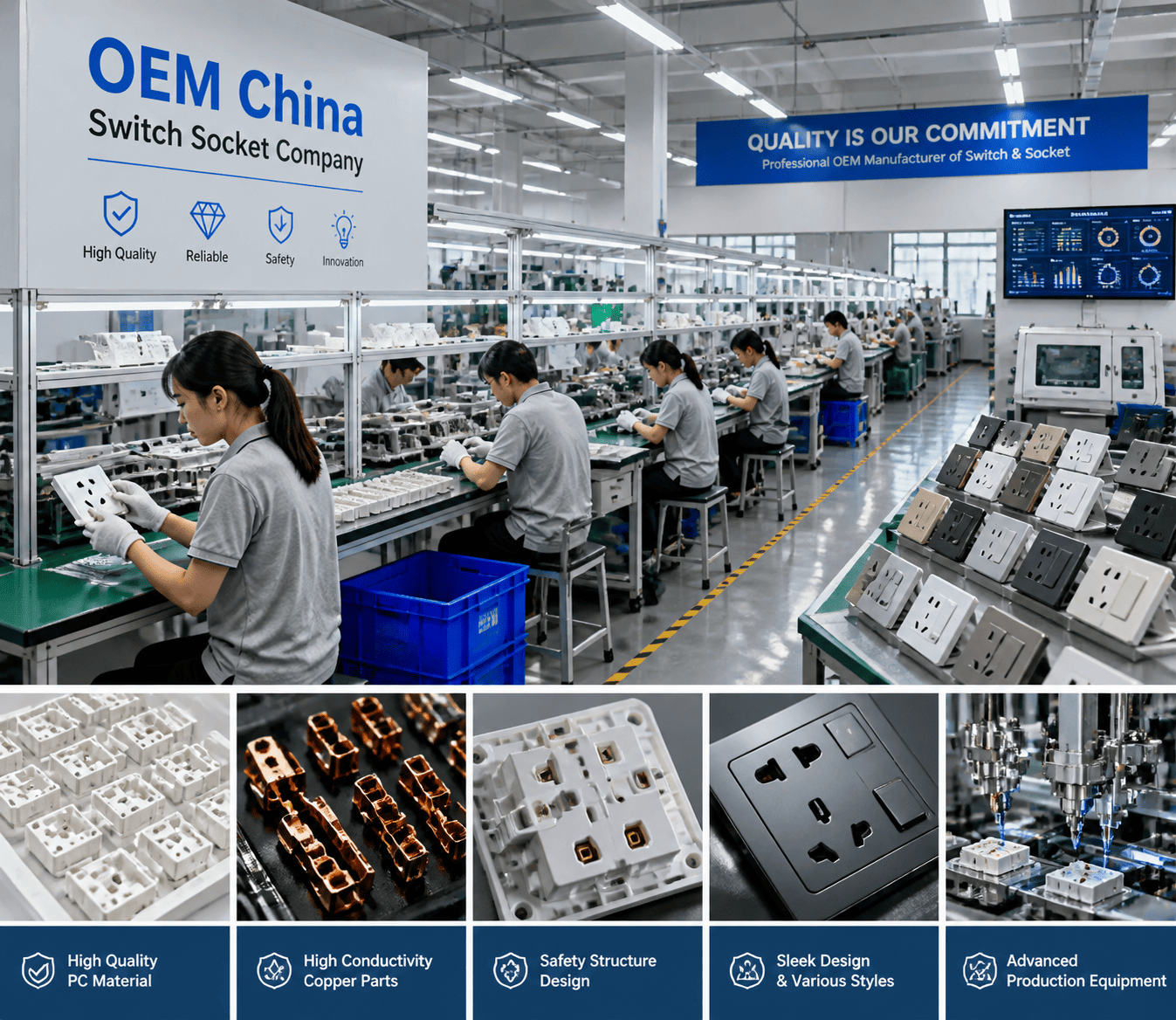
I know that navigating the complex landscape of Chinese manufacturing can feel overwhelming. My goal here is to give you clear insights into what truly matters when you choose a supplier. I believe this information will empower you to find a partner that delivers quality and reliability, not just low prices.
Where are the Main OEM Switch Socket Suppliers in China Located, and Does it Affect Price?
Are you wondering which region in China is best for sourcing switch and socket OEMs? Many buyers don't realize that location can significantly impact both product type and pricing. I have seen how regional differences play a big role in the final offer you receive.
Most OEM switch and socket manufacturers in China are concentrated in Zhongshan, Guangdong, and Wenzhou, Zhejiang.[^1] While Zhongshan typically offers higher-priced, often more design-focused products[^2], Wenzhou provides more cost-effective options due to lower labor expenses.[^3]
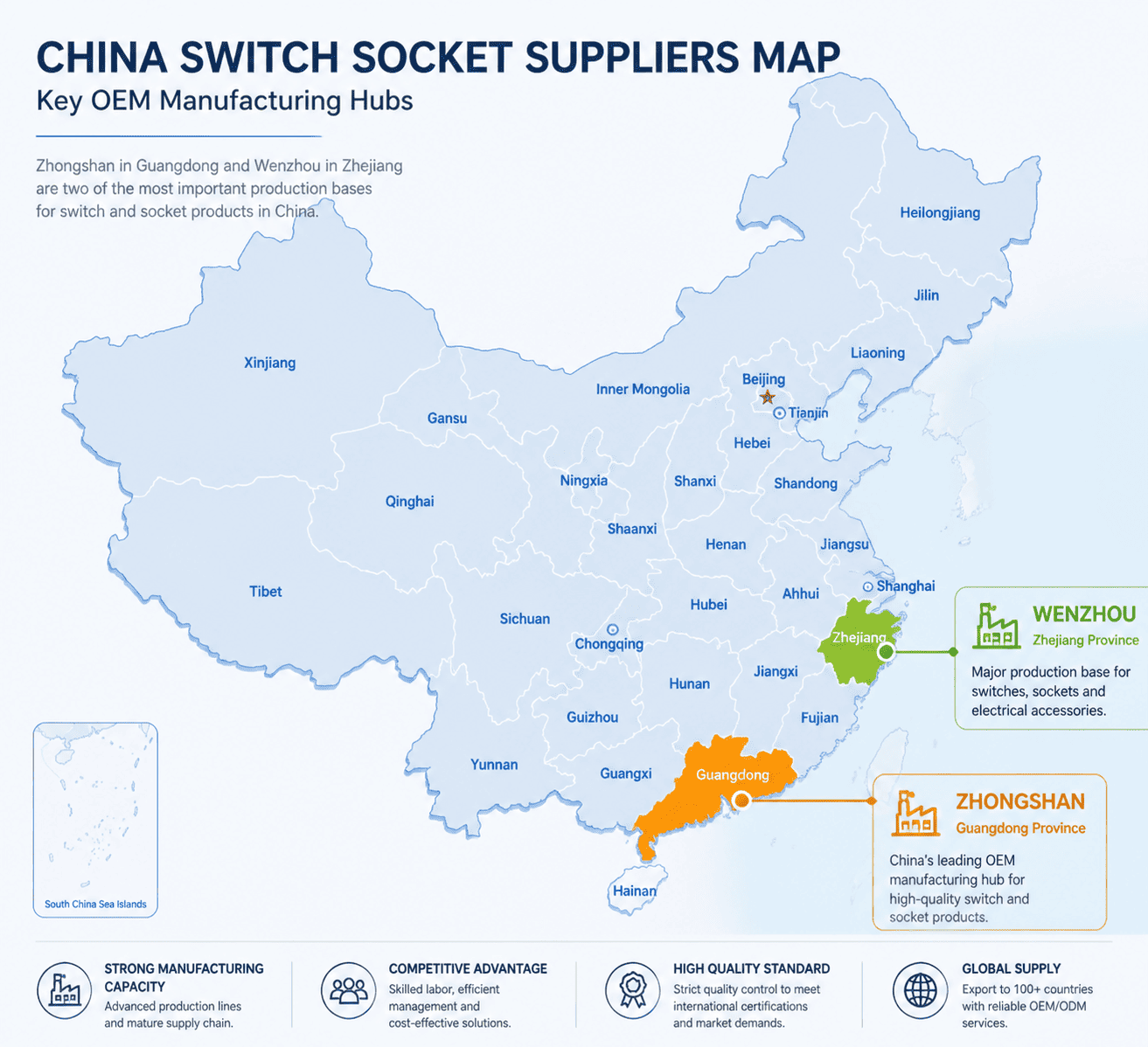
I have learned that understanding these geographical distinctions is key for strategic sourcing. Each region has its own characteristics, which directly influence manufacturing costs and product positioning. When I look at the industry, I see clear patterns emerge.
Key Manufacturing Hubs for Switches and Sockets in China
-
Zhongshan, Guangdong: This area is known for its developed industrial base.[^4] Many factories here focus on higher-end products. They often invest more in design and advanced manufacturing technology. I believe this focus on quality and innovation drives their pricing. Factories in Zhongshan typically have higher operating costs, including wages. This means their product quotes reflect these overheads. Buyers looking for premium designs or specific certifications often turn to Zhongshan. The region’s infrastructure also supports efficient logistics for international shipping.[^5] I see many suppliers here offering comprehensive OEM/ODM services. They can handle complex customization requests. They often work with international brands that demand very high standards. The suppliers in Zhongshan tend to have a mature supply chain for raw materials. This can contribute to consistent product quality.
-
Wenzhou, Zhejiang: Wenzhou, on the other hand, is a hub for more price-competitive manufacturing.[^6] The labor costs in this region are generally lower than in Guangdong. This directly translates into lower production expenses for manufacturers. I often find that factories in Wenzhou can offer very attractive prices. This makes them a popular choice for buyers focusing on volume and cost efficiency. While their prices are lower, it does not always mean lower quality. Many Wenzhou factories produce reliable products. However, buyers need to be more vigilant about material specifications. I have noticed that the focus here is often on mass production. The factories are optimized for high output at reduced costs. They might offer simpler designs or standard product lines. They can still provide good quality if you set clear specifications. The competitive environment in Wenzhou forces factories to be very efficient. This benefits buyers seeking good value.
I have summarized the main differences below:
| Feature | Zhongshan, Guangdong | Wenzhou, Zhejiang |
|---|---|---|
| Price Level | Generally higher | Generally lower |
| Cost Driver | Higher labor, advanced tech, design focus | Lower labor, high-volume efficiency |
| Product Focus | High-end, premium design, specific certifications | Cost-effective, standard lines, mass production |
| Buyer Profile | Seeking quality, innovation, comprehensive ODM | Seeking volume, cost efficiency, good value |
| Quality Control | Often robust, driven by high-standard clients | Can be good, but requires clear material specs |
| Labor Costs | Higher | Lower |
When you are making a sourcing decision, I think it is important to weigh your priorities. If design and premium quality are critical, Zhongshan might be a better fit. If your main concern is cost efficiency for large volumes, Wenzhou offers strong advantages. Both regions have capable manufacturers. Your success depends on clear communication and careful selection.
Are Low-Priced OEM Switch Sockets from China Too Good to Be True?
Are you often tempted by incredibly low prices when sourcing switches and sockets from China? Many procurement managers face this exact dilemma, where a low quote seems like a great deal at first glance. I have seen how such offers can quickly turn into costly nightmares.
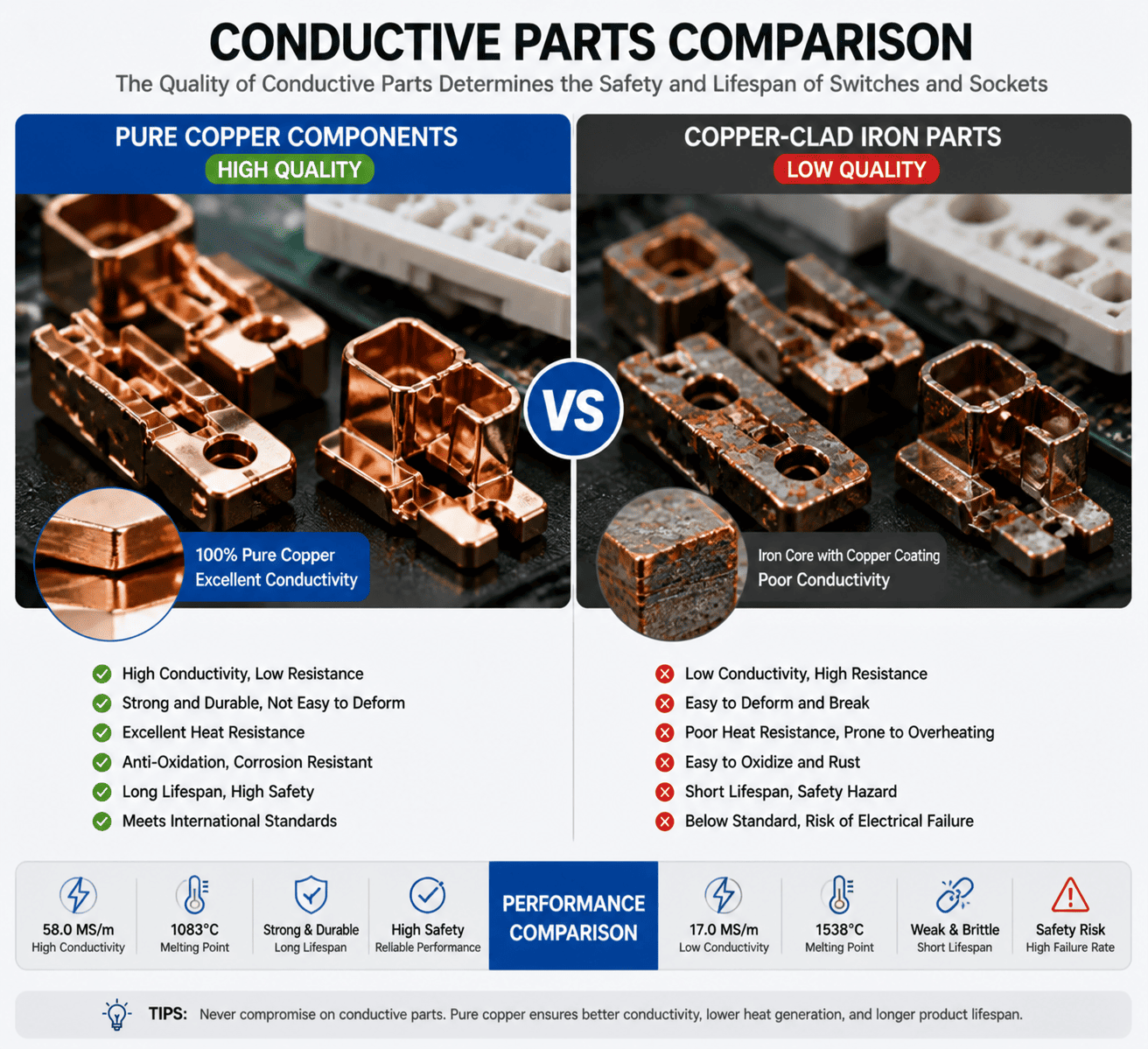
Yes, very low-priced OEM switch sockets from China are often too good to be true, signaling potential compromises in material quality. These compromises can include using recycled plastics or iron parts instead of pure copper, leading to product failures and significant after-sales issues.
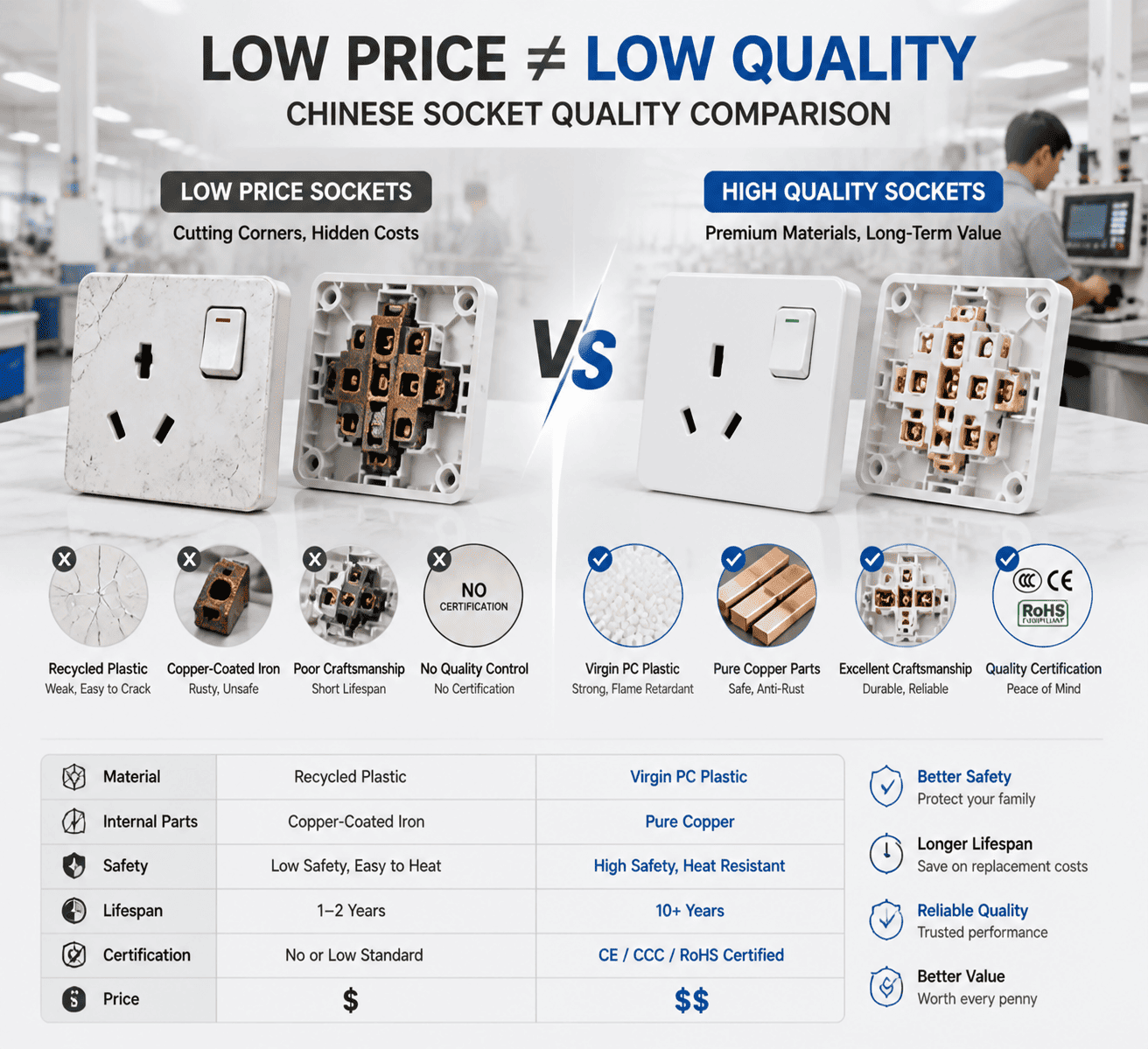
I believe that understanding the common pitfalls of chasing the lowest price is critical. I always advise my partners to look beyond the immediate cost. The long-term impact of poor quality can severely damage your brand and incur massive expenses. I have personally witnessed these consequences.
The Hidden Costs of Cheap Materials
When I evaluate suppliers, I always tell buyers to pay very close attention to the raw materials used. Especially for wall switches and sockets, two components are absolutely critical: the plastic grade and the conductive parts.
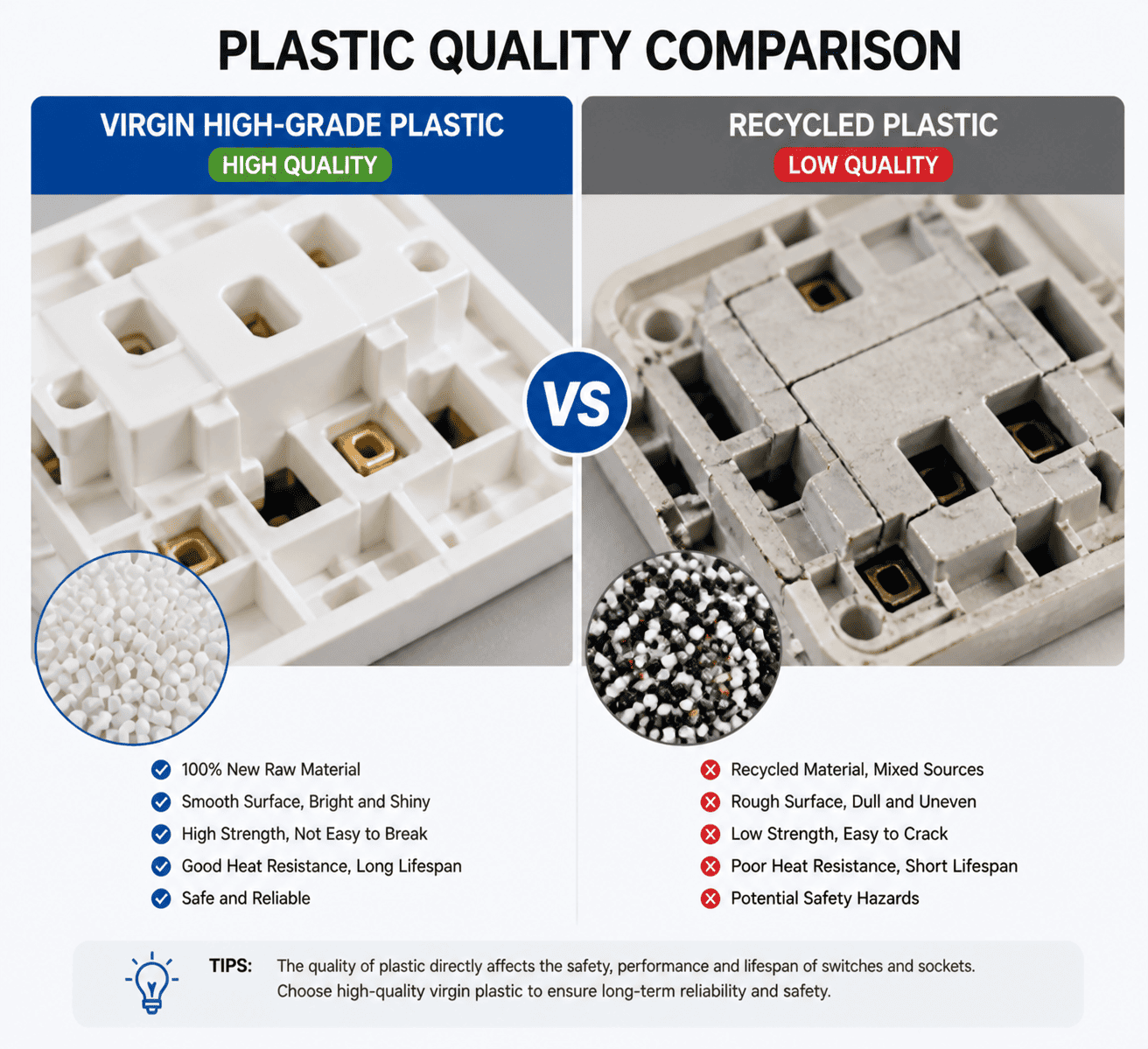
- Plastic Quality: A primary concern is the type of plastic. Reputable manufacturers use virgin, high-grade PC (polycarbonate) or ABS (acrylonitrile butadiene styrene) for their panels and housing.[^7] These materials offer durability, heat resistance, and structural integrity.[^8] I have seen cases where very low-priced products use recycled plastic pellets, sometimes even materials that have been recycled two or three times. This drastically reduces the plastic's strength and lifespan.[^9]
- Conductive Parts (Copper vs. Substitutes): The internal conductive components are equally important. Pure copper offers excellent conductivity and resistance to oxidation.[^10] This ensures stable performance and safety. I have seen many low-cost suppliers substitute pure copper with iron that is merely coated with copper. This material is much cheaper but has very poor conductivity.[^11] It is also highly susceptible to rust and corrosion.[^12]