Worried about supplier quality after recent material price hikes? A suspiciously low price might hide cheap, unsafe materials in your switches. Understanding the key materials helps you spot a bad deal.
Electric switches and sockets are primarily made from four key materials: plastics for the housing, copper for conductivity, iron for structural support, and silver for the contact points.1 Knowing this is your first line of defense against suppliers who offer suspiciously low prices when global material costs are rising.
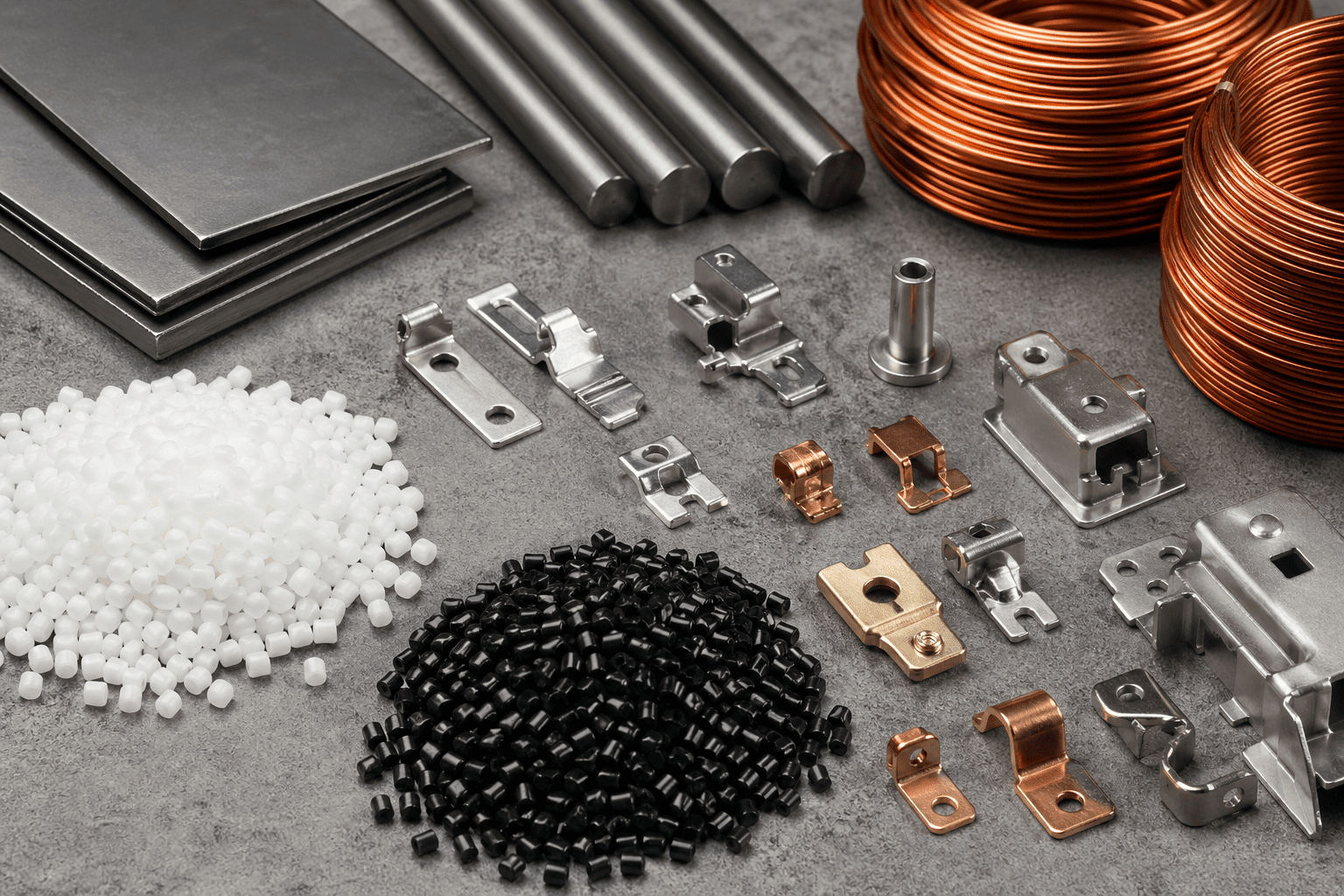
A wall switch seems like a simple product. But inside that simple exterior is a combination of materials that must work together perfectly for decades. The quality of each component, no matter how small, has a huge impact on safety, reliability, and your brand's reputation. It’s easy to focus on the final price, but the real cost of a switch is determined by the quality of the raw materials inside. Let's break down these materials one by one so you can see why cutting corners is a risk not worth taking.
Why is the quality of plastic so critical for switch safety?
A fire hazard starting from a simple switch is a brand's worst nightmare. Cheap plastic can melt, deform, or even ignite, causing catastrophic failures and putting lives at risk.
The best and safest switches use high-quality, flame-retardant plastics like Polycarbonate (PC)2. Cheaper alternatives, especially unidentified recycled plastics, can crack, discolor, and lack the heat resistance to prevent a fire. This creates a massive liability for your brand and end-users.
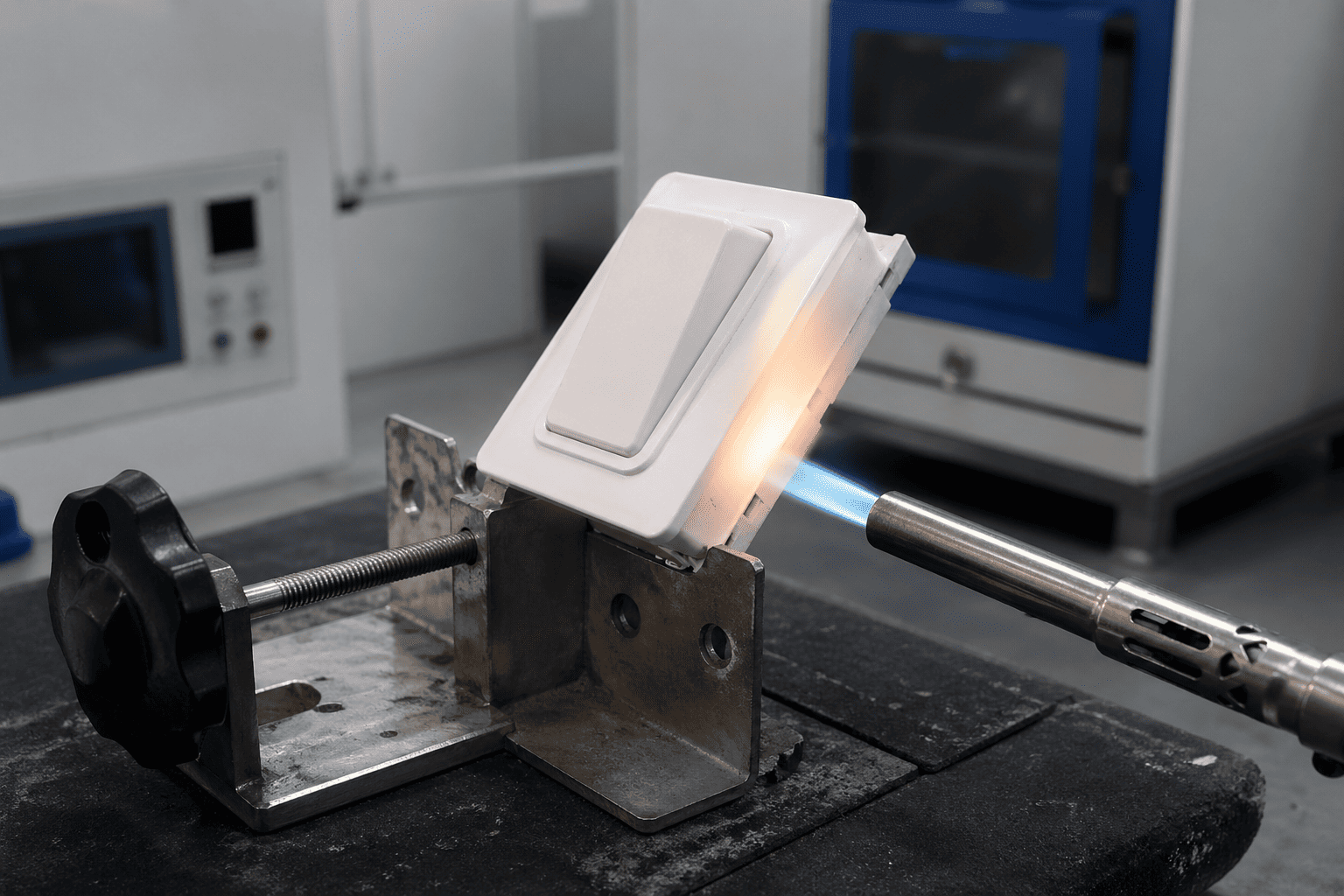
When we talk about the plastic in a switch, we are talking about your product's first line of defense. It's the part your customer sees and touches, and it's the barrier that contains all the electrical components inside. Choosing the right plastic is not a matter of preference; it's a matter of safety and quality.
PC vs. Other Plastics
The industry standard for premium switches is Polycarbonate, or PC. It has excellent impact resistance, so it won't crack during installation, and it maintains its color and structural integrity for years. Most importantly, it is flame retardant. This means if an electrical fault causes high heat, the plastic will not catch fire and spread flames. Cheaper switches might use ABS or, even worse, a mix of recycled plastics. While ABS is strong, it doesn't handle heat as well as PC.3 Recycled plastics are the biggest red flag; you have no idea about their purity or properties, making their performance dangerously unpredictable.4
The Hidden Costs of Cheap Plastic
Here's a table to make it clear:
| Material | Flame Retardance | Impact Resistance | Cost | Long-term Stability |
|---|---|---|---|---|
| PC (Polycarbonate) | Excellent | High | Higher | Excellent, no yellowing |
| ABS | Poor | Good | Medium | Fair, can yellow over time |
| Recycled Plastic | Very Poor | Low | Very Low | Poor, becomes brittle |
I remember a client who, years ago, tried to save a few cents per unit by switching to a supplier who used cheaper plastic. Six months later, they were dealing with a massive recall. Their switch faceplates were cracking when electricians tried to install them in colder climates. The "savings" they made initially cost them millions in recalls, replacements, and brand damage.
How do copper and iron parts determine a switch's lifespan?
Are you dealing with frustrating warranty claims from premature product failures? This is often because poor internal metal parts cause loose connections, overheating, and ultimately, a dead switch.
High-purity copper is vital for conducting electricity with minimal heat, while a strong iron frame provides structural integrity. Using low-grade, thin, or incorrect metals compromises performance, safety, and the long-term reliability of the switch, directly impacting your brand's reputation.
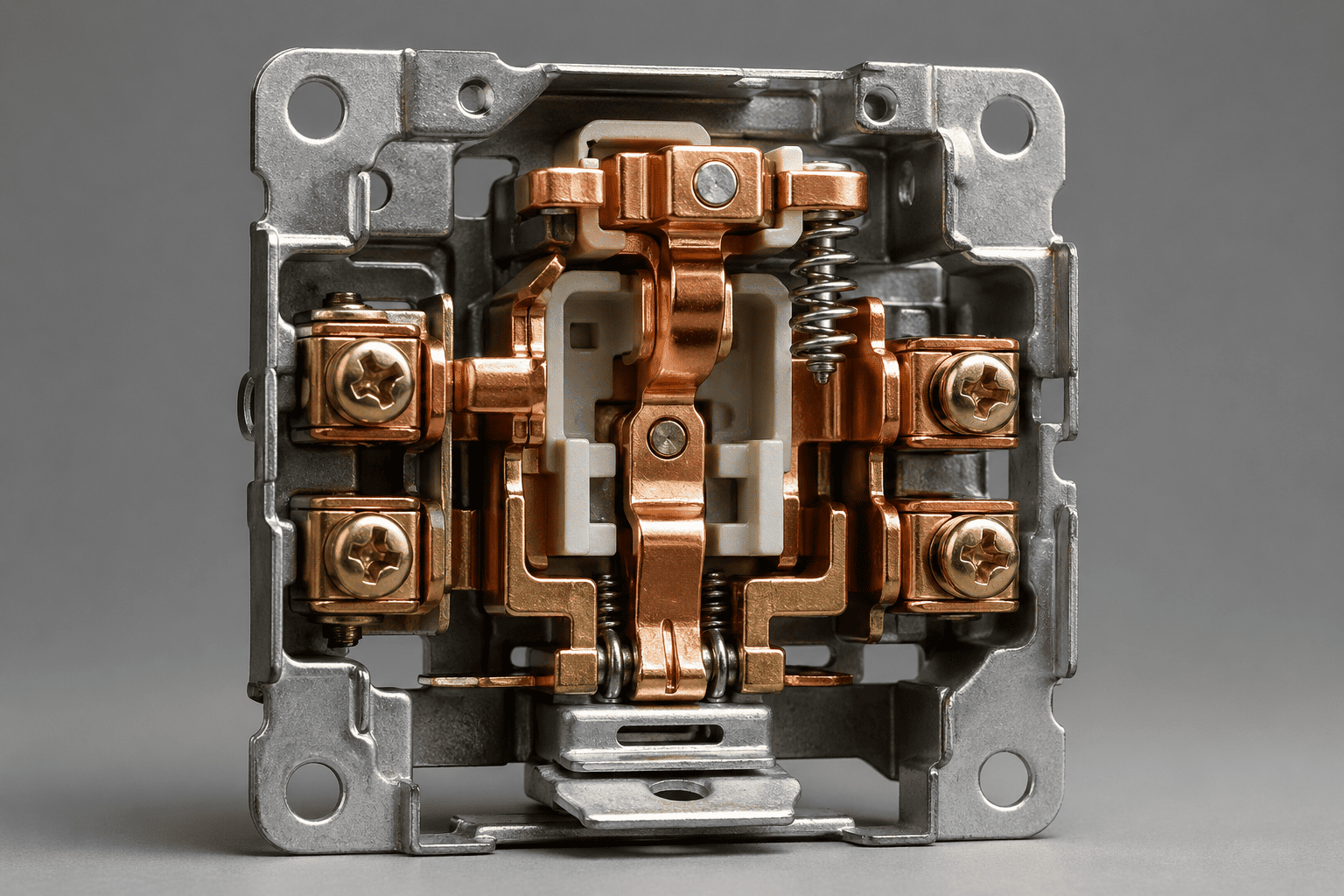
Inside the plastic housing, the metal components are doing all the hard work. They carry the electrical current and provide the mechanical strength for the switch to function. This is an area where a manufacturer can easily cut corners because the customer will never see it. But these hidden components are what separate a switch that lasts for 20 years from one that fails in 20 months.
The Importance of High-Purity Copper
Electricity needs to flow through the switch with as little resistance as possible. Resistance creates heat, and heat is the enemy of any electrical device.5 That's why we use high-quality copper, often a phosphor bronze alloy, for all current-carrying parts6. It has fantastic conductivity and elasticity, meaning it can maintain a tight connection for thousands of cycles without losing its spring. Some manufacturers try to save money by using brass or even copper-plated steel. These materials have higher resistance, which means they get hotter under load. They also lose their tension over time, leading to loose connections, flickering lights, and a serious fire risk.7
The Role of the Iron Frame
The iron or steel frame is the switch's skeleton.8 It holds everything in place and must withstand the force of an electrician tightening screws during installation. A quality frame is made from steel that is thick enough and properly treated to resist bending and rust. If a manufacturer uses a thinner gauge of steel, the whole switch can warp under pressure, causing the mechanism to misalign and fail. We once disassembled a competitor's low-cost switch during a product analysis. The "copper" parts were just iron with a microscopic layer of copper plating. It looked fine from the outside, but it would have failed dangerously under a normal electrical load within months.
Why are silver contacts the secret to a reliable switch?
Ever dealt with products that seem to fail for no reason? This maddening inconsistency is often caused by the tiniest components inside: the electrical contact points.
Silver contacts are where the electrical circuit is physically made and broken. Their size and the quality of the silver alloy are critical. Using small contacts or impure alloys leads to arcing and rapid wear, which is the primary cause of switch failure.
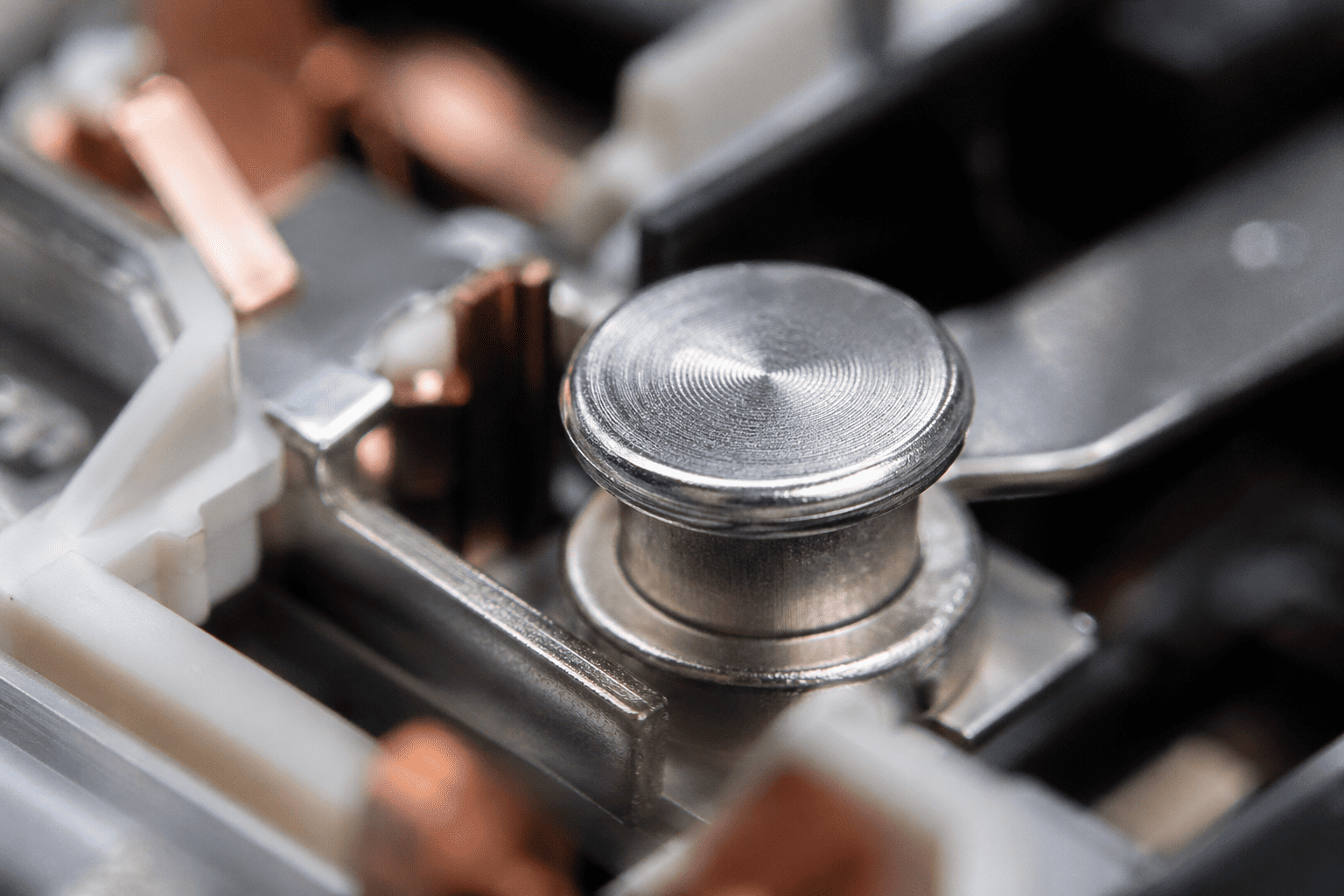
Of all the components, the silver contact might be the most important and the most abused. Every time you flip a switch, a tiny spark, or arc, is created as the contacts meet or separate. The job of the contact is to handle this process thousands of times without failing. The quality here is not optional.
The Science of Silver Contacts
We use silver because it has excellent electrical conductivity and resists oxidation far better than copper.9 However, pure silver is too soft. So, we use specific silver alloys, like silver-cadmium oxide or silver-tin oxide, to make the contacts harder and more resistant to the damage caused by electrical arcing.10 A larger contact point helps dissipate the heat from the arc and provides more surface area, dramatically extending the life of the switch.11 A well-made switch is designed to last for over 40,000 cycles12, and that is only possible with high-quality, generously sized silver alloy contacts.
How Suppliers Cut Corners on Contacts
Since silver is a precious metal, this is a prime target for cost-cutting. There are two common tricks:
- Reduce the size: A manufacturer can save a lot of money by making the contact point a tiny speck. This dramatically reduces the switch's lifespan, as the small contact wears out or burns away very quickly.
- Use plating instead of solid alloy: An even worse shortcut is to use a base metal like copper and apply a thin plating of silver. The switch might work for a short time, but the plating quickly wears off, leading to catastrophic failure.
I'll never forget when a potential customer sent us a sample from their current supplier that was failing in the field. We cut it open in our lab, and the "silver contact" was a speck so small you could barely see it. We then showed them our standard contact next to it. The difference was obvious. They instantly understood why our price was what it was, and why their current "deal" was costing them so much in the long run.
| Contact Type | Performance | Lifespan | Cost |
|---|---|---|---|
| Large Silver Alloy | Excellent, low arc | 40,000+ cycles | High |
| Small Silver Alloy | Good, higher arc | ~15,000 cycles | Medium |
| Silver-Plated Copper | Poor, high failure risk | <5,000 cycles | Low |
What should you do if your supplier's price hasn't increased?
You've found a supplier whose price hasn't budged, even as raw material costs are rising. This "good deal" could mean they have secretly switched to cheaper, dangerous materials inside your products.
When raw material costs rise by 10-20% and a manufacturer's price stays flat, you must be cautious. This is a major red flag. They are likely absorbing the cost by substituting inferior materials, which puts your brand, your customers, and your business at risk.
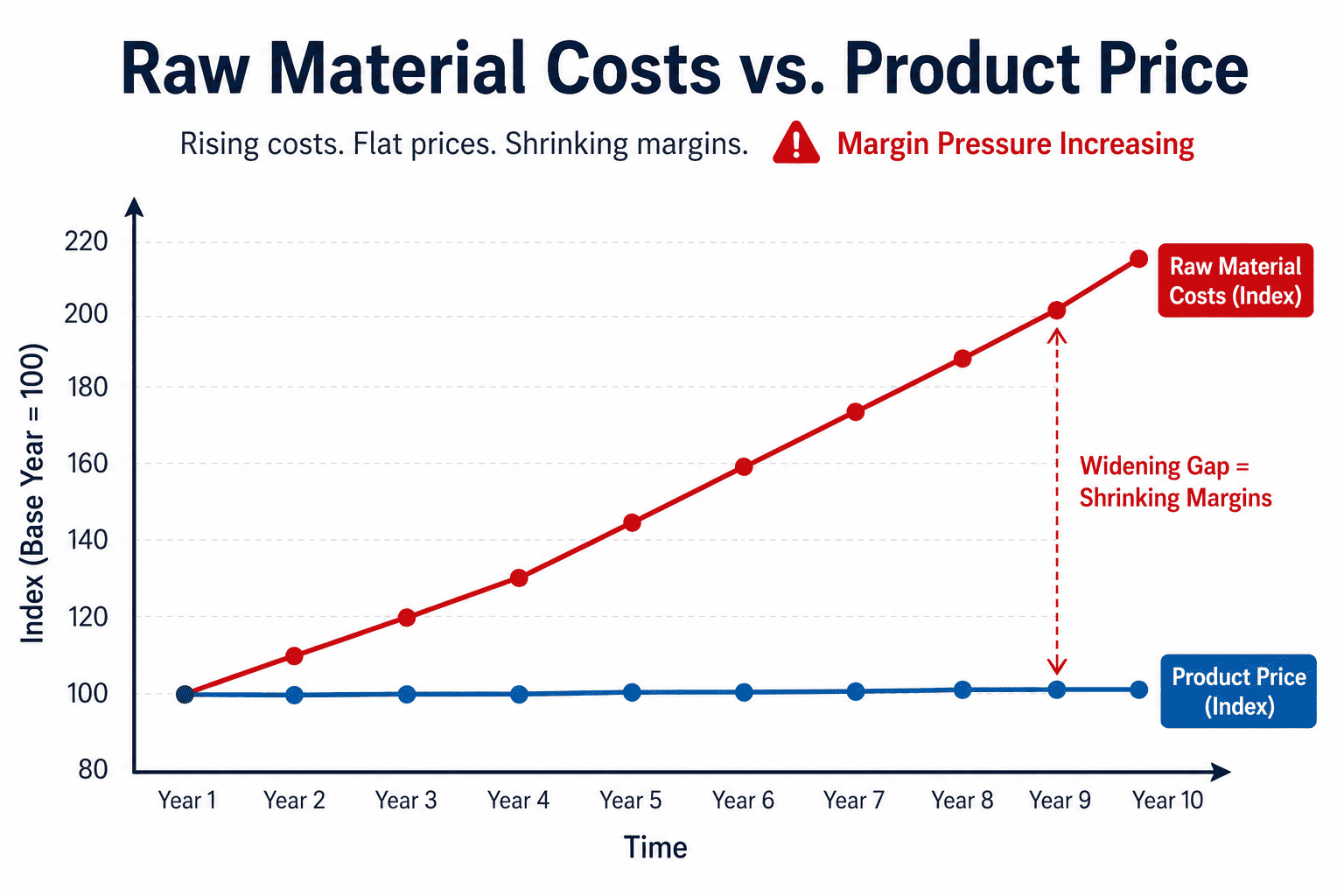
In my 12+ years in this business, I've seen markets go up and down. Recently, we've seen significant price increases in key commodities like copper and PC plastics. As a procurement manager, you see this on your reports. So, when you get a quote from a supplier that seems too good to be true, it probably is. No factory can magically avoid global market trends.
The Manufacturer's Dilemma
When material costs go up, every manufacturer has a choice:
- Be Transparent: Have an honest conversation with partners about the new reality and implement a necessary, fair price adjustment. This protects the product's quality and the long-term partnership.
- Cut Corners: Secretly substitute cheaper materials to maintain the old price and margin. This sacrifices quality and trust for a short-term gain.
A good partner chooses option one. An untrustworthy supplier will always choose option two. The worst part is that you won't notice the change in quality immediately. The switches will look the same. They might even pass initial testing. But the failures will come, whether it's six months or a year down the line, once the products are already in people's homes. By then, the damage is done.
The One Question You Must Ask
If you encounter a supplier who hasn't raised prices, or who offers you an unbelievable deal, you need to protect your company by asking one direct question:
"I see that the market prices for copper and PC plastic have increased significantly. How have you managed to keep your prices the same?"
Then, listen carefully to the answer. A reliable partner will give you a clear, transparent explanation. They might talk about how they hedged material purchases, improved production line efficiency, or are temporarily accepting a lower margin to maintain the relationship. A supplier you can't trust will become defensive, change the subject, or give you a vague, unbelievable story. I had a client tell me about this exact scenario. They asked another supplier that question, and the supplier couldn't give a straight answer. The client walked away and stayed with us, because trust is more valuable than a few cents saved today.
Conclusion
Material quality is not negotiable in our industry. When material costs are rising, a price that is too low is not a deal; it is a warning sign.
"[PDF] TC 48 - IEC", https://assets.iec.ch/further_informations/1252/48.pdf. A technical reference on low-voltage switches supports that switch assemblies commonly combine insulating polymer housings, conductive copper or copper-alloy parts, ferrous support components, and silver or silver-alloy contacts. Evidence role: general_support; source type: institution. Supports: Electric switches and sockets are primarily made from plastics, copper, iron or steel, and silver contact materials.. Scope note: This would support typical material selection rather than prove that every switch or socket uses exactly these four materials. ↩
"Polycarbonate - Wikipedia", https://en.wikipedia.org/wiki/Polycarbonate. Polycarbonate materials are widely documented as engineering thermoplastics with high impact strength and grades that can meet flame-retardancy classifications used for electrical applications. Evidence role: definition; source type: encyclopedia. Supports: High-quality switch housings often use flame-retardant polycarbonate plastics.. Scope note: The evidence should distinguish between polycarbonate as a polymer family and specific flame-retardant PC grades; not all PC products have the same fire rating. ↩
"Polymer Composites Based on Polycarbonate/Acrylonitrile ... - PMC", https://pmc.ncbi.nlm.nih.gov/articles/PMC10054822/. Comparative polymer property data generally show polycarbonate has a higher heat-deflection or service-temperature range than ABS, supporting the statement that ABS is less heat-resistant in this context. Evidence role: general_support; source type: education. Supports: ABS generally has lower heat resistance than polycarbonate.. Scope note: Exact performance varies by grade, additives, and testing method, so the source would support a general comparison rather than all ABS and PC formulations. ↩
"[PDF] Suppressing Mechanical Property Variability in Recycled Plastics ...", https://arxiv.org/pdf/2502.02359. Research on recycled plastics reports that mixed feedstocks, contamination, and prior degradation can cause variability in mechanical and thermal properties, which contextualizes concerns about unidentified recycled plastics in safety-critical housings. Evidence role: mechanism; source type: paper. Supports: Unidentified recycled plastics can have variable purity and unpredictable performance properties.. Scope note: Such evidence supports variability risks in recycled polymers generally; it does not prove that all recycled plastic switch parts are unsafe. ↩
"Joule heating - Wikipedia", https://en.wikipedia.org/wiki/Joule_heating. The Joule heating principle states that electrical current passing through resistance produces heat proportional to current squared and resistance, supporting the mechanism by which higher-resistance switch parts can overheat. Evidence role: mechanism; source type: encyclopedia. Supports: Electrical resistance in current-carrying parts produces heat.. Scope note: This establishes the physical mechanism, not the failure rate of any particular switch design. ↩
"Phosphor bronze", https://en.wikipedia.org/wiki/Phosphor_bronze. Engineering references describe copper and copper alloys such as phosphor bronze as common electrical-contact and spring materials because they combine electrical conductivity with mechanical resilience. Evidence role: general_support; source type: institution. Supports: Copper and phosphor bronze alloys are suitable for current-carrying parts in switches due to conductivity and mechanical properties.. Scope note: The evidence should be used to support material suitability; it may not show that every high-quality switch uses phosphor bronze for all current-carrying parts. ↩
"Appliance and Electrical Fire Safety - USFA.FEMA.gov", https://www.usfa.fema.gov/prevention/home-fires/prevent-fires/appliance-and-electrical/. Electrical safety guidance identifies loose connections as a source of increased resistance, overheating, arcing, and potential fire hazards, supporting the risk pathway described for weakened contacts. Evidence role: mechanism; source type: government. Supports: Loose electrical connections can cause overheating, arcing, flickering, and fire risk.. Scope note: The source would support the hazard mechanism, not necessarily prove that brass or copper-plated steel contacts lose tension in every switch design. ↩
"Electrical Switch Box Support Installation - YouTube",
. Technical descriptions of wall-switch construction identify metal mounting straps or frames as structural components that support and align the switch mechanism during installation. Evidence role: definition; source type: institution. Supports: The metal frame in a switch provides structural support and alignment.. Scope note: This supports the general function of the frame; detailed requirements vary by switch type and national standard. ↩"Silver - Wikipedia", https://en.wikipedia.org/wiki/Silver. Materials references report that silver has the highest electrical conductivity of the elements and that copper surfaces oxidize more readily in air, supporting the use of silver at electrical contact interfaces. Evidence role: general_support; source type: encyclopedia. Supports: Silver has very high electrical conductivity and better contact-surface stability than copper in many environments.. Scope note: The oxidation comparison is context-dependent because silver can tarnish in sulfur-containing environments; the source should not be read as proving silver is always superior in every atmosphere. ↩
"Properties of AgSnO2 Contact Materials Doped with Different ... - PMC", https://pmc.ncbi.nlm.nih.gov/articles/PMC9316443/. Electrical-contact materials literature describes silver-cadmium oxide and silver-tin oxide as contact alloys developed to improve resistance to welding, erosion, and arc-related wear compared with pure silver. Evidence role: mechanism; source type: paper. Supports: Silver-cadmium oxide and silver-tin oxide alloys improve contact durability under arcing compared with pure silver.. Scope note: Specific performance depends on load type, contact geometry, and switching conditions, so the evidence supports the material rationale rather than a universal ranking. ↩
"[PDF] thermal and electrical contact conductance studies", https://ntrs.nasa.gov/api/citations/19860021906/downloads/19860021906.pdf. Electrical-contact theory links contact area, current density, contact resistance, and heat generation, providing a mechanism by which larger contacts can reduce localized heating and wear under switching loads. Evidence role: mechanism; source type: research. Supports: Larger electrical contacts can reduce localized heating and wear by lowering current density and improving heat dissipation.. Scope note: The source would support the mechanism; actual service life also depends on alloy, load, arc suppression, force, and environmental conditions. ↩
"IEC 60669 Six-Station Switch Plug And Socket Endurance ...", https://www.bndtestequipment.com/industry-news/iec-60669-six-station-switch-plug-and-socket-endurance-tester-ensuring-product-durability-and-safety/. Switch endurance standards and testing literature specify mechanical or electrical operating-cycle tests for household and similar fixed electrical switches, offering context for cycle-life claims such as 40,000 operations. Evidence role: case_reference; source type: institution. Supports: Well-made switches may be designed and tested for tens of thousands of operating cycles, including around 40,000 cycles.. Scope note: A standards source would show applicable endurance-test frameworks or ratings; it would not verify that the specific product in the article achieves 40,000 cycles without its own test report. ↩