How Do Ethernet Wall Sockets Work?
leading paragraph: Are you frustrated by slow network speeds or unreliable connections? Poorly chosen network components can silently kill your efficiency and productivity.
snippet paragraph: Ethernet wall sockets provide a stable, wired connection point for network devices, linking them to your broader network infrastructure through structured cabling. They convert raw cable ends into durable, accessible ports, ensuring consistent data flow and system reliability when selected and installed correctly.
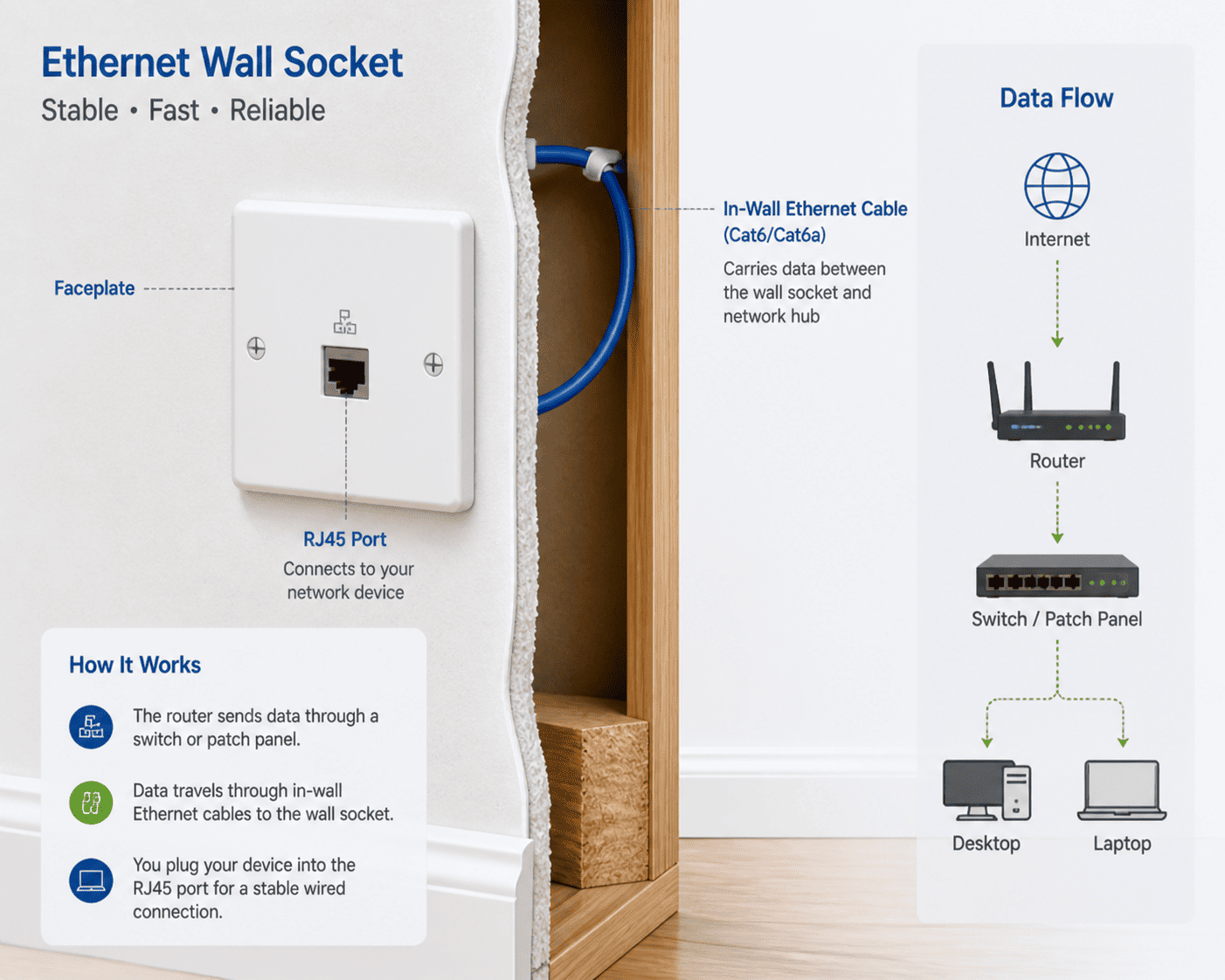
Transition Paragraph: When I first started helping customers with their networking needs, I often heard questions about what seemed like simple components. But I quickly learned that even something as common as an Ethernet wall socket has many layers. What appears to be a basic connector is actually a critical part of your network's overall performance. This is why understanding how they work is not just about technical details, but about making smart choices for your projects. Let's look closer at these crucial pieces of hardware.
What is inside an Ethernet wall socket, and why does it matter for my project?
leading paragraph: Ever wondered what makes an Ethernet socket tick, or why some perform better than others? Not knowing the inside story can lead to unexpected network issues.
snippet paragraph: The second paragraph, which answers the question posed by the headline, is the paragraph that will be used later to compete for Google's Featured Snippets. (max 50 words)
Inside an Ethernet wall socket, you will find a small circuit board with metal contacts and a punch-down block, which converts the bare wires from an Ethernet cable into a standardized RJ45 port. This internal design directly affects signal quality, durability, and ease of installation, all crucial for your project's success.
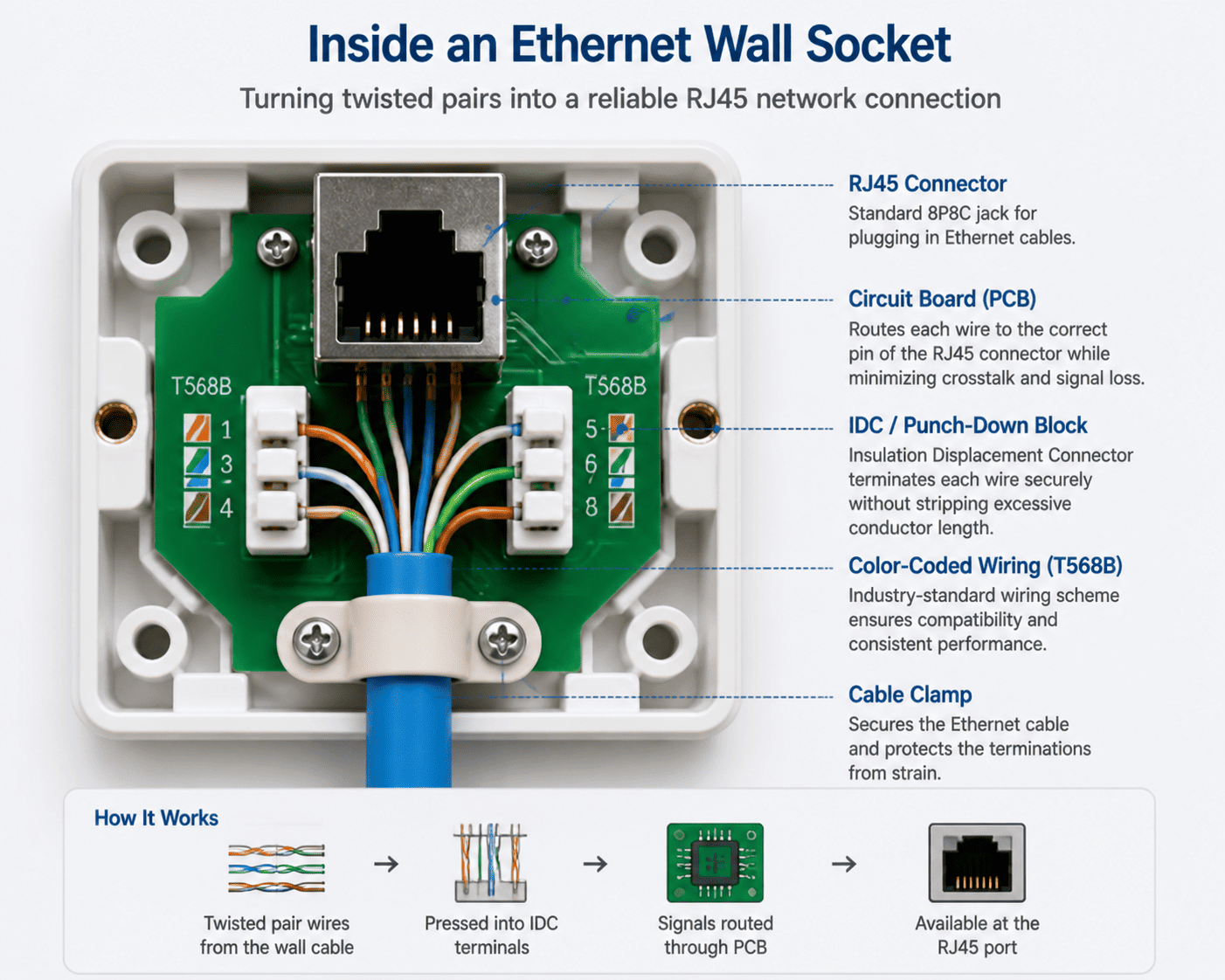
Dive deeper Paragraph: From my conversations with many procurement managers, I've noticed a common misunderstanding: people often see the socket as just an "outlet." But it's much more. The core components are the RJ45 jack (where you plug in your Ethernet cable) and the IDC (Insulation Displacement Connector) terminals, often called punch-down blocks. These terminals are where the individual wires of your Ethernet cable connect. The quality of these metal contacts directly impacts signal integrity. If they are cheap or poorly made, you will see data loss and slower speeds. I always advise my clients to consider the material quality. For instance, some use gold-plated contacts. This might seem like a small detail, but it improves conductivity and resists corrosion over time, especially in environments with temperature fluctuations. Another key part is the circuit board that connects these elements. Its design helps to reduce crosstalk, which is when signals from one pair of wires interfere with another. A well-designed circuit board protects the data signal. Understanding these internal parts helps you make informed decisions about durability and long-term performance, reducing project risks down the line. It's not just about how it looks on the wall; it's about what’s hidden inside.
How do I choose the right category (Cat5e, Cat6, Cat6a) for my network?
leading paragraph: Confused by Cat5e, Cat6, and Cat6a ratings and which one is right for your facility? Choosing the wrong cable category can severely bottleneck your network.
snippet paragraph: Selecting the correct Ethernet category (Cat5e, Cat6, Cat6a) depends on your required data speed, future growth plans, and installation distance. Each category supports different maximum speeds and bandwidths, directly impacting network performance and cost, so match it to your actual application needs.
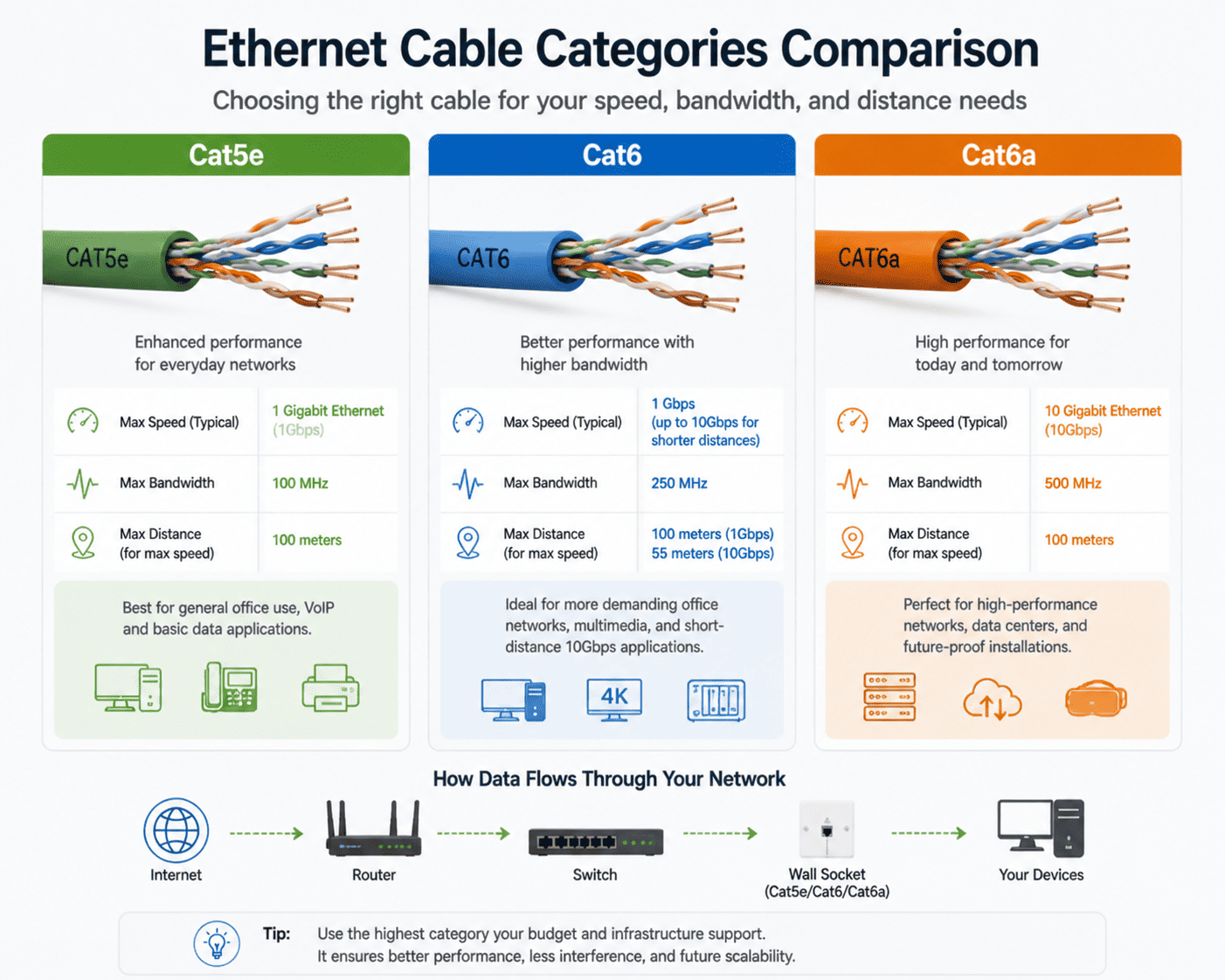
Dive deeper Paragraph: I've had countless discussions with procurement managers trying to navigate the "Cat" categories. Many automatically assume higher numbers mean better, which isn't always the most cost-effective or practical choice. The key is understanding what each category offers and, more importantly, what your project truly needs.
Understanding Cable Categories:
| Category | Max Speed (Typical) | Max Bandwidth | Max Distance (for max speed) | Common Uses |
|---|---|---|---|---|
| Cat5e | 1 Gigabit Ethernet | 100 MHz | 100 meters | General office, VoIP, basic data |
| Cat6 | 1 Gigabit Ethernet (up to 10Gbps for shorter distances) | 250 MHz | 100 meters (1Gbps), 55 meters (10Gbps) | More demanding office, multimedia, data centers (short runs) |
| Cat6a | 10 Gigabit Ethernet | 500 MHz | 100 meters | High-performance data centers, future-proof installations |
When customers ask, "Should I just go for Cat6a?", I always respond with questions about their current and future applications. If they are simply connecting office PCs for email and standard internet use, Cat5e or Cat6 might be perfectly adequate and more budget-friendly. However, if they are building a data center, plan to run high-bandwidth video, or anticipate major upgrades within the next decade, investing in Cat6a makes more sense. I remember one client who initially wanted Cat6a for every workstation, thinking "more is better." After discussing their actual usage – mostly basic administrative tasks – we realized Cat6 was a better fit for most areas, reserving Cat6a for specific high-demand server connections. This saved them significant costs without sacrificing performance where it mattered. It's about balancing performance with realistic needs and budget.
Are all Ethernet wall sockets installed the same way?
leading paragraph: Worried about complex installations or incompatible parts when choosing Ethernet sockets? Incorrect installation methods can compromise your entire network's performance.
snippet paragraph: No, Ethernet wall sockets have different installation methods, primarily varying by termination style (punch-down, tool-less) and whether they are modular (keystone) or integrated. Understanding these differences is vital for efficient setup, compatibility with existing systems, and ensuring proper network function.
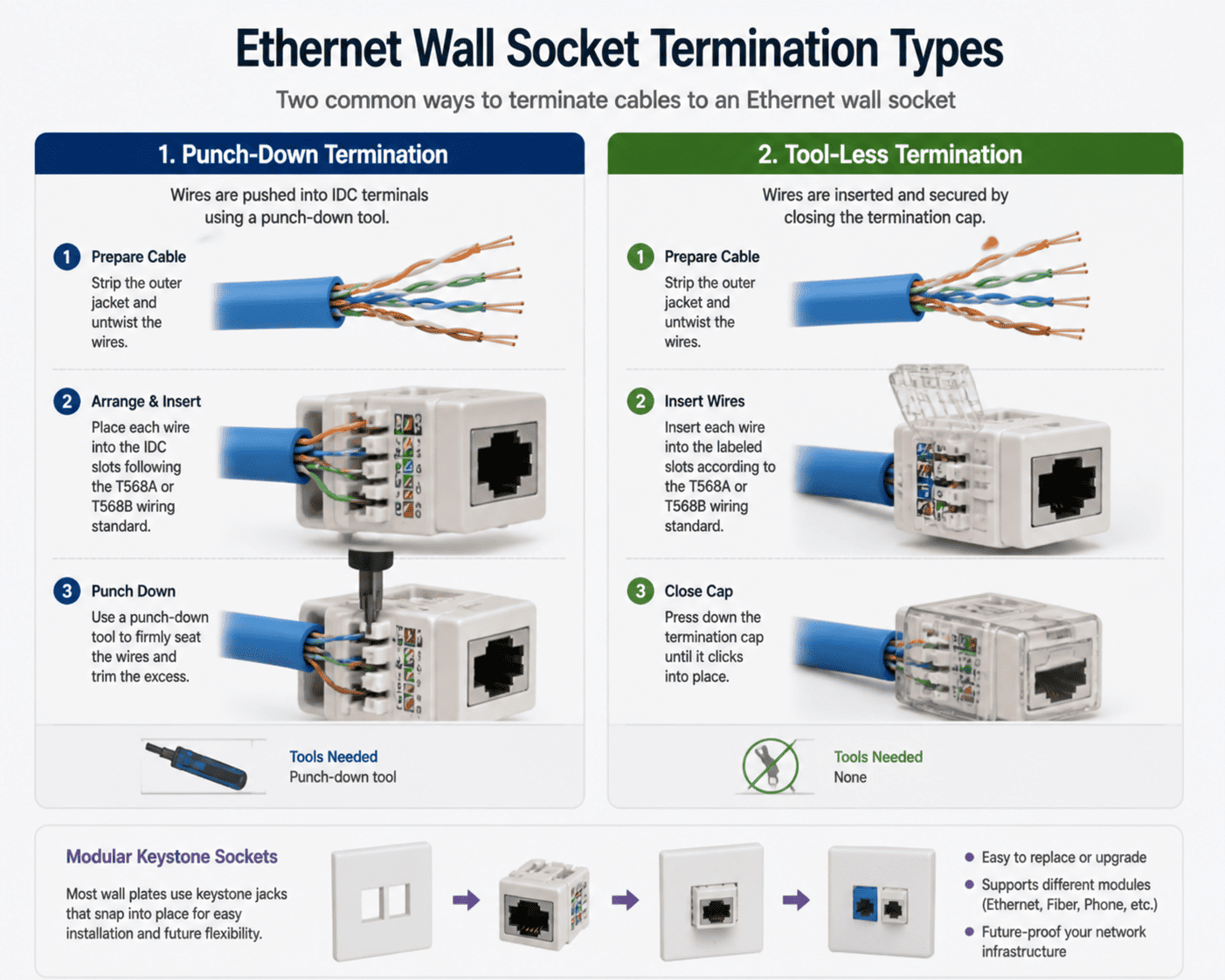
Dive deeper Paragraph: Installation methods are a big concern for many clients, especially those managing larger projects. I've often seen projects delayed or performance issues arise due to a mismatch between the chosen socket and the available installation tools or technician skills. The two main types of termination methods are punch-down and tool-less.
Ethernet Socket Termination Types:
| Type | Description | Tools Needed | Pros | Cons |
|---|---|---|---|---|
| Punch-down | Wires are pushed into IDC terminals with an impact tool. | Punch-down tool | Very secure, widely used, reliable | Requires a specific tool, can be slower |
| Tool-less | Wires are inserted and crimped by closing a cap. | None (sometimes small pliers for wire seating) | Faster installation, easier for beginners | Can be less secure if not properly closed |
When I talk to clients, I emphasize the importance of matching the socket type to their installers' expertise and the project's scale. For a large office building with many drops, a punch-down system, while requiring a specific tool, allows for very fast and consistent terminations by experienced technicians. For smaller projects or where specialized tools are limited, tool-less options can be attractive. I also stress checking for modularity. Many modern wall plates use keystone jacks. These are standardized inserts that snap into a wall plate. This modularity offers great flexibility. If you need to change from an Ethernet port to a fiber optic port or a phone jack later, you can simply swap out the keystone jack without replacing the entire wall plate. This adaptability is a huge advantage for long-term planning and reduces future maintenance costs, a key point for any brand manager. Understanding these nuances upfront prevents costly reworks and ensures a smoother project rollout.
What common problems can happen with Ethernet wall sockets, and how do I avoid them?
leading paragraph: Facing mysterious network slowdowns or dropped connections? Overlooking potential problems with your Ethernet sockets can lead to persistent and frustrating issues.
snippet paragraph: Common problems with Ethernet wall sockets include poor termination, using incorrect cable categories, and low-quality components, leading to signal loss or network failure. Avoiding these issues requires careful selection of high-quality sockets, proper installation techniques, and matching components to network speed requirements.
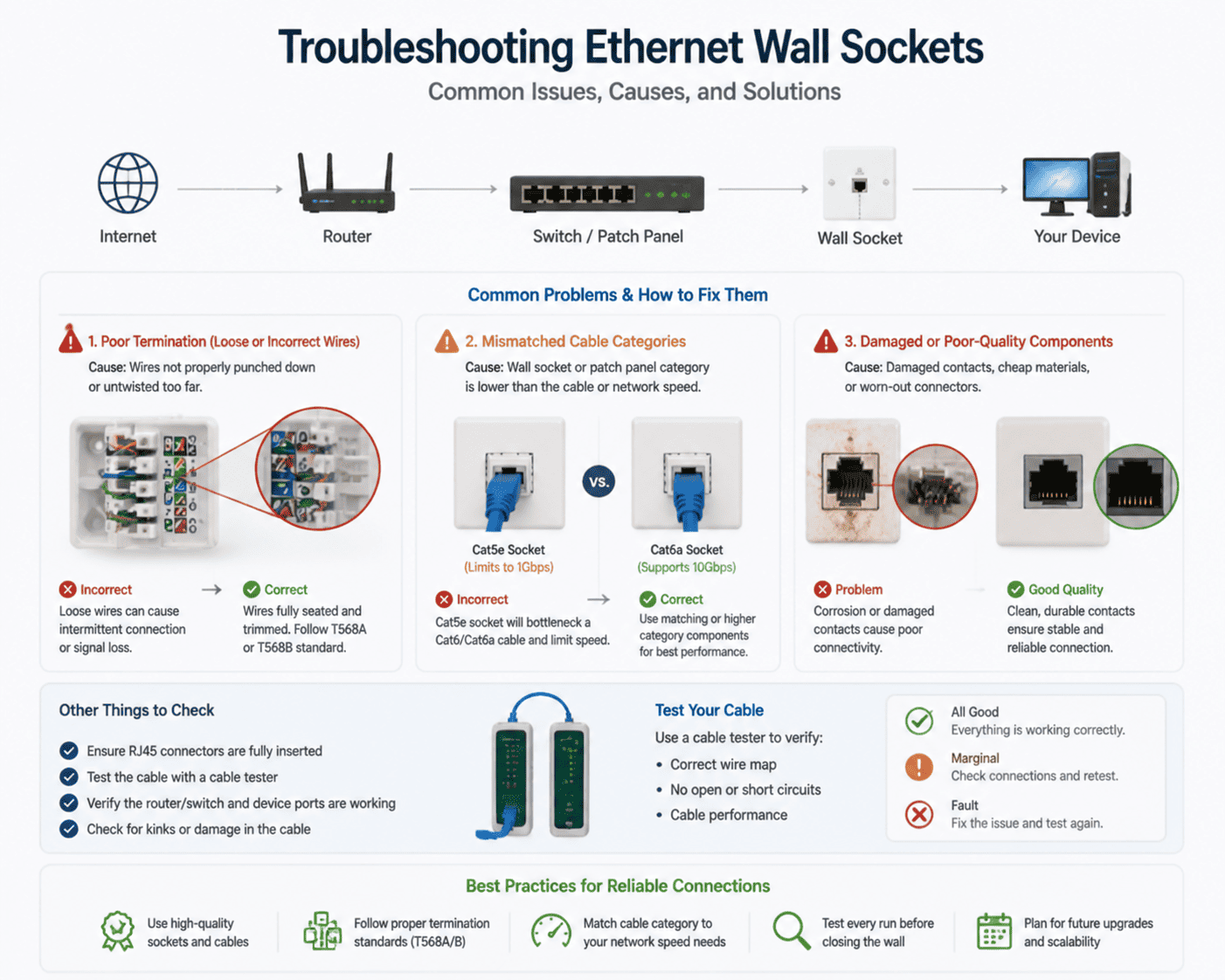
Dive deeper Paragraph: My conversations with procurement and brand managers often circle back to preventing problems. No one wants to deal with network failures after installation. From my experience, many issues stem from a few key areas. The most frequent problem I see is poor termination. Even if you have the best Cat6a cable, if the wires aren't correctly punched down or the jacket is stripped too far, you introduce crosstalk or a weak connection. I always highlight the importance of using a good quality punch-down tool or ensuring tool-less connectors are fully closed. Another common pitfall is using mismatched components. For example, putting a Cat5e socket on a Cat6 cable run won't give you Cat6 performance; the socket becomes the bottleneck. It's like putting bicycle tires on a sports car. I had a client once who couldn't figure out why their 10 Gigabit network was only running at 1 Gigabit in certain areas. It turned out some older wall sockets were still Cat5e, limiting the entire segment. Quality of the socket itself also plays a huge role. Cheap plastics or flimsy internal contacts can break easily, especially in high-traffic areas or during routine maintenance. I always recommend sourcing sockets from reputable manufacturers who provide quality assurance. Lastly, environmental factors can matter. High humidity or extreme temperatures can degrade cheaper materials over time. I explain that investing in a slightly higher-grade product initially often saves a lot of troubleshooting headaches and replacement costs in the long run. Thinking about these potential issues during the procurement phase is critical for reducing risks and ensuring a reliable network.
Conclusion
Ethernet wall sockets are vital for reliable networks. Understanding their internal design, category types, installation, and potential problems helps you make informed choices, ensuring your network performs reliably and meets project demands.