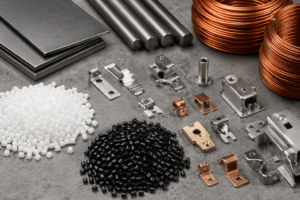
Your customers are tired of bulky adapters and fighting for charging space. This clutter frustrates them, and standard outlets feel outdated. A custom-branded smart outlet can finally solve this problem.
The best way to source a smart outlet with USB and Type-C is to find an OEM/ODM partner who understands more than just charging technology. Look for a supplier who can manage safety compliance for your market, handle design customization, and support your branding goals effectively.
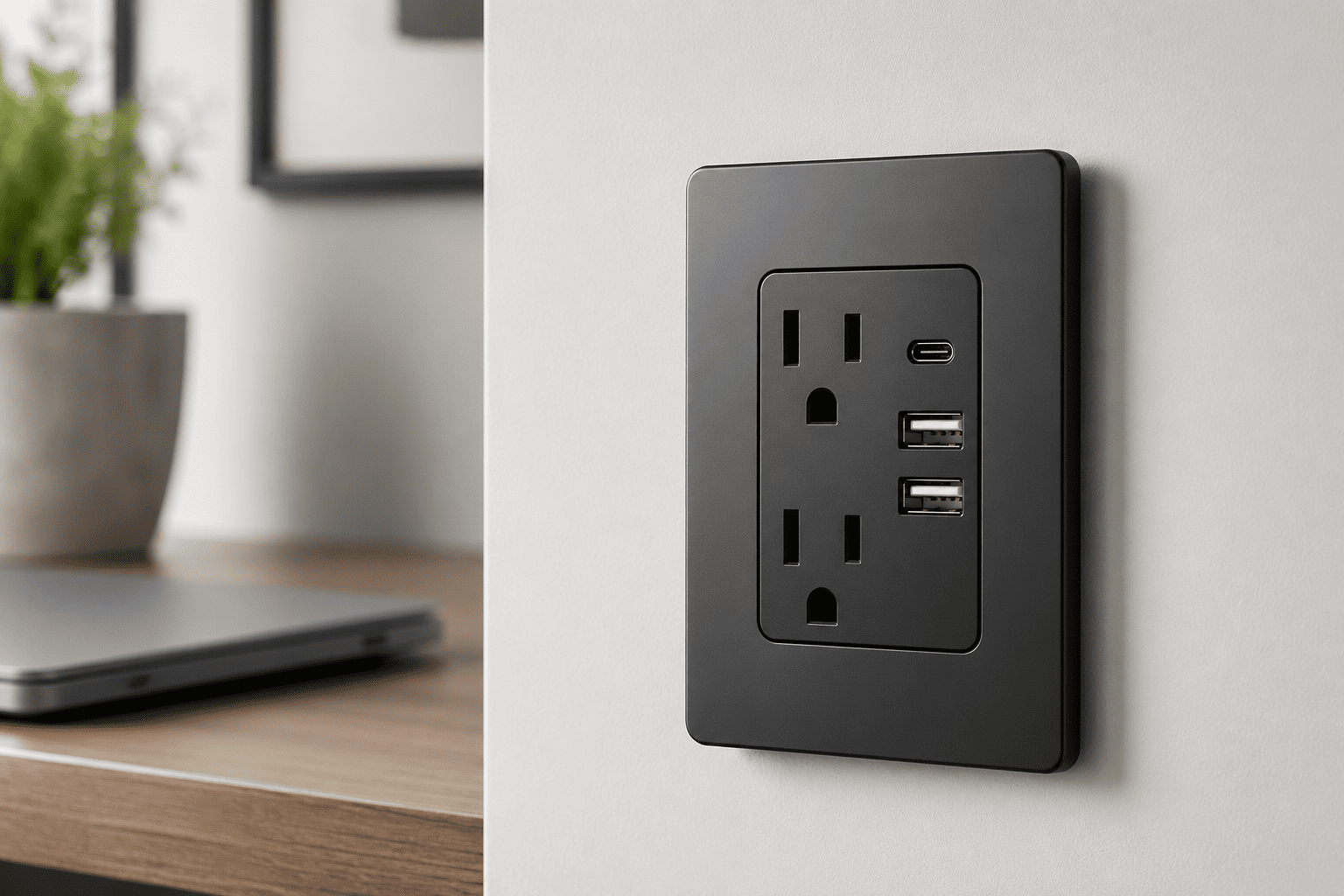
I've worked in this industry for over a decade, and I've seen many overseas buyers begin the sourcing process. They often start by asking about the charging power and the number of ports. But the most successful projects I've been a part of are the ones where the conversation quickly moves beyond simple specifications. The real work begins when we start discussing how to build a product that is safe, compliant, and desirable for a specific target market. Let's explore what that journey really looks like and how you can navigate it successfully.
Are You Focusing Only on USB Power and Missing the Bigger Picture?
You're comparing suppliers based on the advertised USB wattage. This narrow focus can lead you to a non-compliant or unsafe product that ultimately damages your brand's reputation.
Many buyers prioritize high wattage (e.g., 65W fast charging). However, the most critical factor is whether the entire outlet unit is certified for your target market1. A powerful but uncertified product is a significant liability and cannot be sold legally2, making its power rating irrelevant.
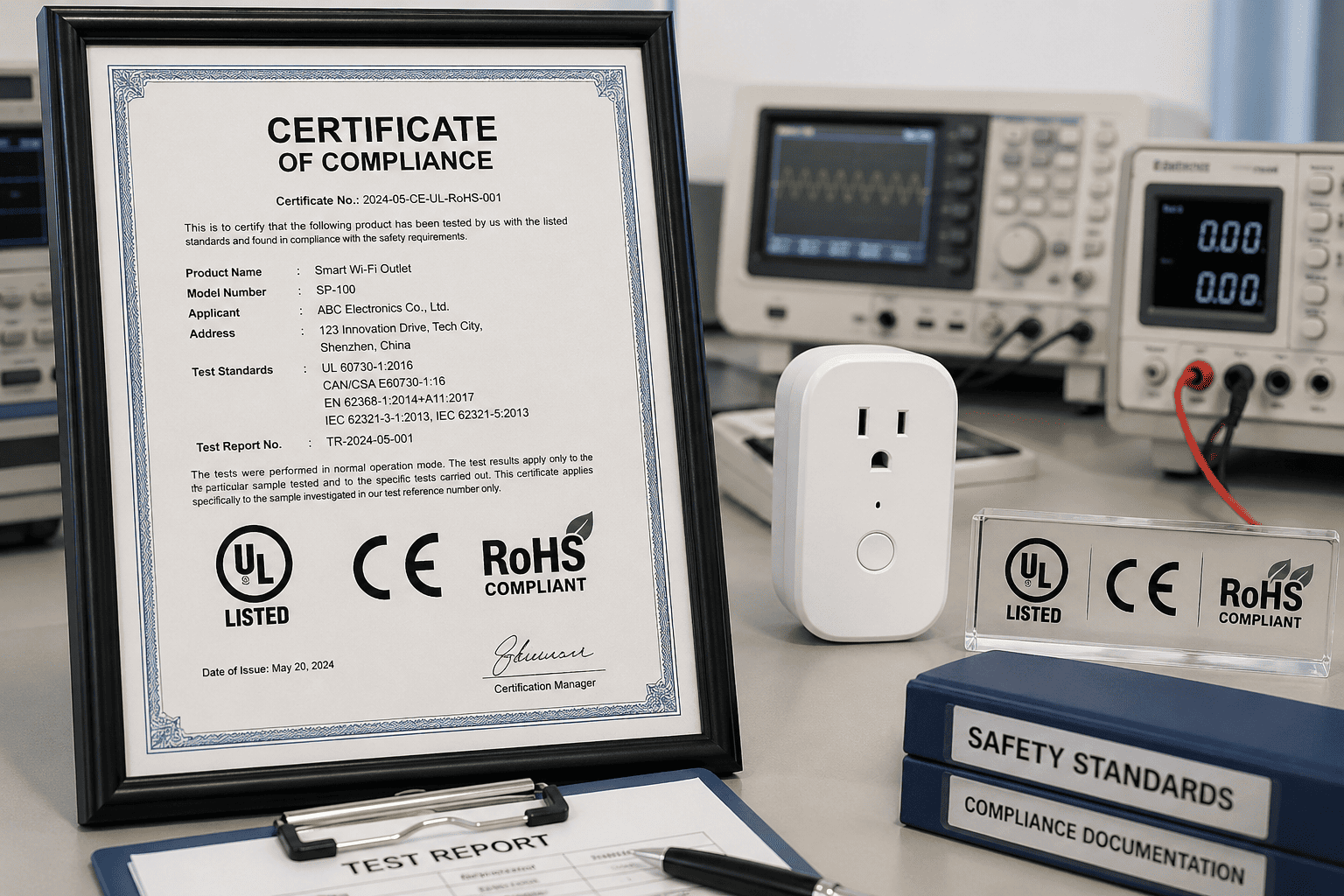
In our discussions with overseas brand managers, the initial questions are almost always about function. "Can you do 65W Power Delivery?" or "How fast can it charge a new phone?" These are valid questions, but they only scratch the surface. A focus solely on the power output of the USB module ignores the fact that this module is integrated into a larger electrical product that must meet strict safety standards3. The real risk isn't that the outlet charges slowly; it's that it could overheat, cause a fire4, or fail to meet the legal requirements for sale in your country. For example, a product destined for the United States needs to consider UL certification5, while one for Europe requires CE marking6. These are not just stamps of approval; they are comprehensive standards that dictate everything from internal wiring and component selection to heat dissipation and material flammability7.
Beyond Watts: The Safety Ecosystem
A responsible OEM/ODM partner guides the conversation toward total product integrity. We see the outlet not as a collection of parts, but as a single, integrated system where every component affects the others.
| Factor | Spec-Focused View | Holistic OEM/ODM View |
|---|---|---|
| USB Power | "Is it 65W?" | "Is the 65W power delivery stable, safe, and certified for my market's grid?" |
| Safety | Assumed to be okay. | "Does the entire unit have UL/CE/BS certification? Are all internal components compliant?" |
| Port Spacing | Not considered. | "Can a user plug in a bulky USB-C cable and a USB-A cable at the same time without blocking each other?" |
| Heat Management | Not considered. | "How does the outlet manage heat dissipation when the main socket and all USB ports are under full load?" |
The conversation needs to shift from "How many watts?" to "Can you help us engineer a product that achieves CE certification for the German market?" This is the question that leads to a successful, sellable product.
How Much Customization Is Actually Possible for a Smart Outlet?
You think all wall outlets from China look the same. A generic, off-the-shelf product will not stand out on retail shelves or help you build a strong brand identity.
With the right OEM/ODM partner, nearly every visible and functional aspect of a smart outlet can be customized. This includes the faceplate material, color, finish, the layout of the ports8, branding on the product itself, and even the complete retail packaging experience.
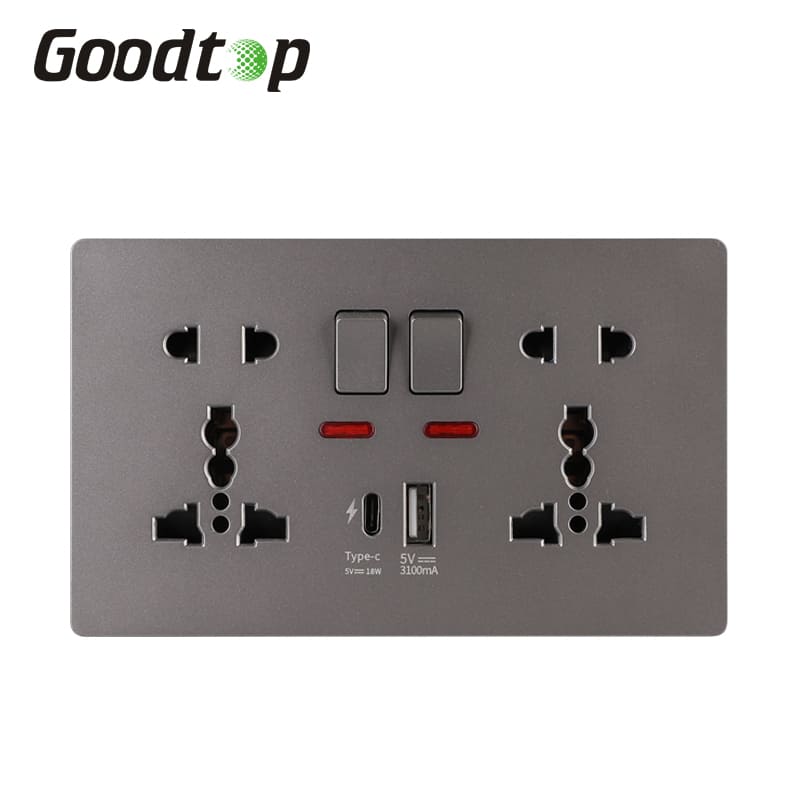
When we talk about OEM/ODM, we are moving far beyond just putting your logo on a pre-existing product. It is a collaborative process to create a product that reflects your brand's identity and meets your customers' expectations. I remember working with a client from the UK who was developing a product line for high-end kitchen renovations. They knew a standard white plastic socket would not work. We worked together through several iterations to develop a socket with a brushed stainless steel finish, elegant beveled edges, and a single, minimalist LED indicator that was subtle and not distracting. The final product was more than just a power source; it became a design element that complemented the premium kitchens it was installed in. This is the true value of a deep partnership. It's about transforming a commodity into a unique product.
Levels of Customization
We can break down the customization possibilities into three main areas, from simple aesthetic changes to a fully branded product experience.
| Customization Area | Standard Option | OEM/ODM Possibilities |
|---|---|---|
| Faceplate Color | White, Black | Pantone color matching, dual-tone designs, metallic or wood-grain finishes. |
| Material | Standard PC Plastic | High-grade fire-retardant PC9, tempered glass, real metal (aluminum, stainless steel), or wood accents. |
| Port Layout | Fixed configuration. | Adjusting the spacing between USB-A and USB-C ports, vertical vs. horizontal alignment, adding or removing ports. |
| Branding | No logo / Factory logo. | Subtle laser-etched logo, color-printed brand name, custom icon design for ports. |
| Packaging | Bulk brown box. | Full-color retail box with your brand story, graphics, user manuals, and installation guides. |
True customization is about making strategic choices that align with your brand positioning, target audience, and price point.
What Do You Need to Prepare Before Contacting a Chinese Supplier?
You are ready to start sourcing but don't know what to ask for first. Sending an unprepared inquiry often leads to wasted time, confusing quotes, and a frustrating process for everyone.
Before contacting a supplier, clearly define your target market, the required safety certifications10 (e.g., CE, UL), your desired aesthetic, and your estimated annual volume. This information allows a potential partner to provide a relevant and accurate proposal right away.
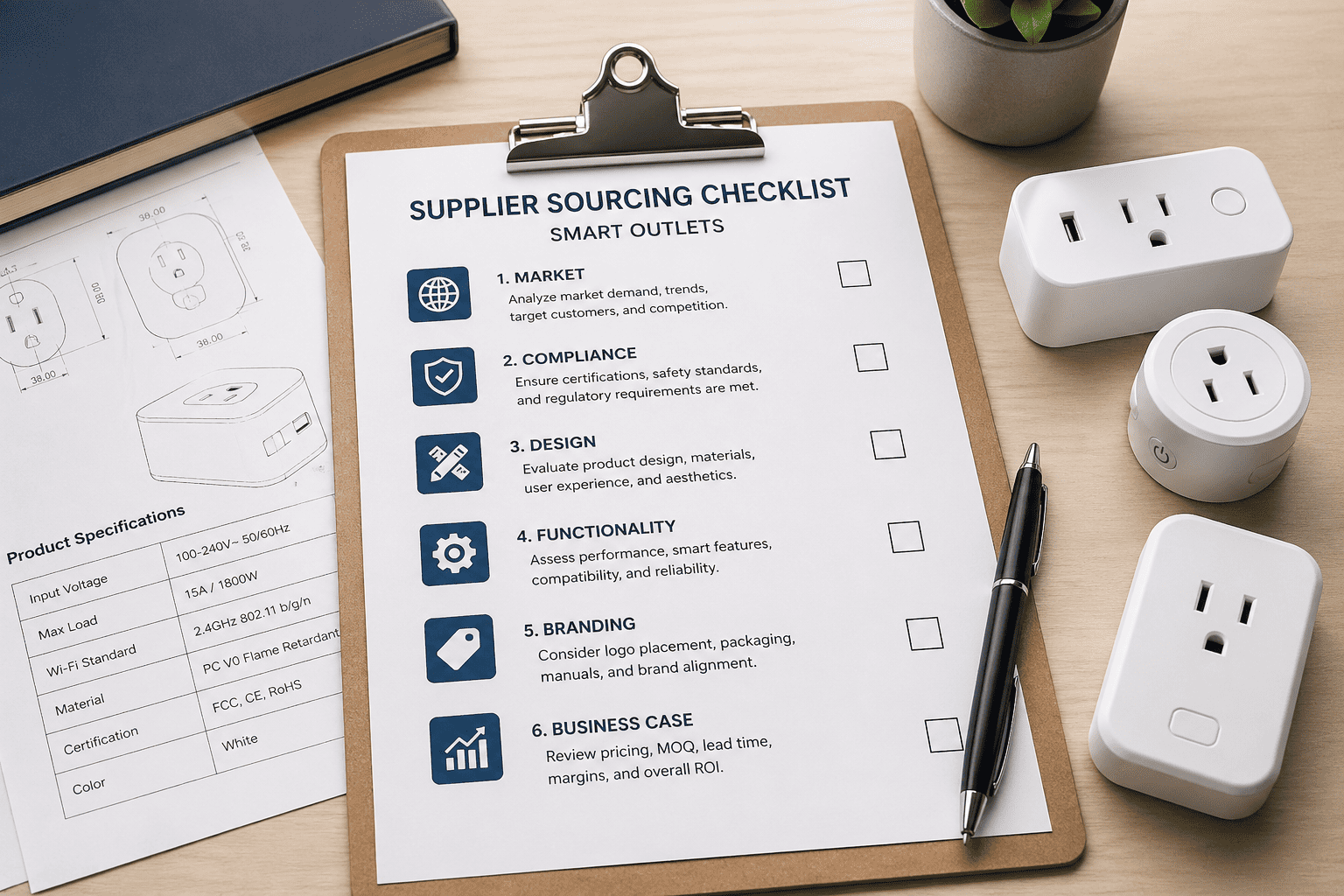
From my position as a supplier, the most productive conversations start with a clear brief from the buyer. When a potential partner comes to us with a well-defined project scope, we can immediately skip the generic back-and-forth and dive into solving their specific challenges. Instead of guessing what they might want, we can start discussing concrete solutions, such as which certified components are best for their region, how to achieve a specific finish within their budget, or what the timeline for mold development might look like. A good brief turns a vague inquiry into a serious project discussion. It shows that you have done your homework and are a serious partner, which motivates the supplier to invest their best resources in your project from day one.
Your Project Brief Checklist
To help you prepare, here is a simple checklist of the key information that will help us help you.
| Category | Key Questions to Answer |
|---|---|
| Market | Which specific country or region will this product be sold in? (e.g., USA, Germany, Saudi Arabia) |
| Compliance | What safety certifications are mandatory for that market? (e.g., UL, ETL, CE, BS, SASO) |
| Design | What is the desired look and feel? (e.g., Modern, minimalist, classic) Do you have any material or color preferences? |
| Functionality | What is the minimum power required for the USB/Type-C ports? Do you need specific fast-charging protocols like PD or QC11? |
| Branding | Do you need a logo printed or etched on the product? Do you require fully customized retail packaging? |
| Business Case | What is your estimated annual purchase volume12? What is your target launch date? |
Having answers to these questions transforms the initial contact from a simple price request into the beginning of a true partnership. It is the difference between a 10-email chain that goes nowhere and a productive first phone call that moves your project forward.
Conclusion
Sourcing the right smart outlet is about finding a strategic partner, not just a product. Focus on total safety, deep customization, and a clear market fit to build a successful product.
"OSHA's Nationally Recognized Testing Laboratory (NRTL) Program", http://www.osha.gov/nationally-recognized-testing-laboratory-program. Market-surveillance and conformity-assessment guidance from bodies such as the European Commission and OSHA indicates that electrical products are assessed against jurisdiction-specific safety requirements before being placed on the market or used in regulated settings. Evidence role: expert_consensus; source type: institution. Supports: The entire outlet unit should be certified or assessed for the target market, not evaluated only by USB wattage.. Scope note: This supports the compliance priority in general; it does not independently verify any specific smart outlet model or supplier. ↩
"[PDF] Resellers Guide to Selling Safer Products", https://www.cpsc.gov/s3fs-public/Resellers-Guide-Updated-Final-3-3--21.pdf. European Commission CE-marking guidance explains that products covered by EU harmonization legislation must meet applicable requirements before being placed on the EU market, supporting the claim that nonconforming electrical goods may be legally restricted. Evidence role: general_support; source type: government. Supports: A powerful but uncertified or nonconforming electrical product may be barred from legal sale in a target market.. Scope note: This directly supports EU-market legality; legal requirements in the United States and other markets vary by product category, state, local code, and sales channel. ↩
"1926.403 - General requirements. | Occupational Safety ...", http://www.osha.gov/laws-regs/regulations/standardnumber/1926/1926.403. IEC and UL standards for plugs, socket-outlets, receptacles, and related electrical equipment set construction and safety test requirements, supporting the statement that integrated outlets are governed by formal safety standards. Evidence role: definition; source type: institution. Supports: A USB-integrated wall outlet is part of a larger electrical product that must meet formal safety standards.. Scope note: The precise standard depends on the outlet type, voltage, installation environment, and target country. ↩
"[PDF] Household Extension Cords Can Cause Fires", https://www.cpsc.gov/s3fs-public/5032.pdf. Fire-safety data from agencies such as NFPA or CPSC document that electrical distribution equipment and wiring faults are recognized contributors to residential fires, providing context for overheating and fire risks in unsafe electrical products. Evidence role: statistic; source type: research. Supports: Unsafe or poorly designed electrical outlets can present overheating and fire hazards.. Scope note: Such data support the general hazard mechanism; they do not prove that the specific outlet described would overheat or cause a fire. ↩
"OSHA's Nationally Recognized Testing Laboratory (NRTL) ...", http://www.osha.gov/nationally-recognized-testing-laboratory-program. OSHA’s Nationally Recognized Testing Laboratory program and UL materials show that UL-listed products are evaluated to applicable safety standards, supporting UL certification as a common U.S. route for demonstrating electrical-product safety. Evidence role: historical_context; source type: government. Supports: Products destined for the United States commonly need to consider UL or equivalent NRTL safety certification.. Scope note: UL is one recognized testing organization, not the only possible U.S. pathway; specific legal requirements may depend on local electrical codes and authorities having jurisdiction. ↩
"Low Voltage Directive - Wikipedia", https://en.wikipedia.org/wiki/Low_Voltage_Directive. European Commission guidance states that CE marking indicates a product’s conformity with applicable EU harmonization legislation, including electrical safety requirements where relevant. Evidence role: definition; source type: government. Supports: Electrical products sold in Europe may require CE marking when covered by relevant EU legislation.. Scope note: CE marking is often based on manufacturer conformity assessment and is not always a third-party certification; applicability depends on the directives covering the product. ↩
"[PDF] Full-Scale Flammability Measures for Electronic Equipment", https://nvlpubs.nist.gov/nistpubs/Legacy/TN/nbstechnicalnote1461.pdf. Safety standards for receptacles and electrical equipment include construction, temperature-rise, insulation, and fire-resistance considerations, supporting the claim that certification evaluates more than external function. Evidence role: mechanism; source type: institution. Supports: Electrical safety standards can address internal construction, thermal behavior, and flammability of components.. Scope note: The cited standard may not use the article’s exact wording and may apply differently depending on whether the product is classified as a receptacle, charger, switch, or combined device. ↩
"OEM vs ODM: What's the Difference in Hardware Manufacturing?", https://www.seacomp.com/resources/oem-vs-odm-manufacturing. Definitions of OEM and ODM manufacturing describe supplier involvement in producing buyer-specified designs or original designs for another brand, providing context for customization of visible and functional product features. Evidence role: definition; source type: encyclopedia. Supports: OEM/ODM arrangements can allow customization of product appearance and configuration, including materials, colors, finishes, and layouts.. Scope note: This supports the general manufacturing model; it does not prove that every listed customization is feasible for every outlet design or certification pathway. ↩
"[PDF] Electrical Appliance Enclosures", https://www.cpsc.gov/s3fs-public/electric.pdf. Polymer and materials references describe flame-retardant polycarbonate grades and UL 94 flammability classifications used for electrical and electronic enclosures, supporting the relevance of fire-retardant PC as an outlet material option. Evidence role: mechanism; source type: paper. Supports: Fire-retardant polycarbonate can be used as a safety-oriented material choice in electrical-product housings or faceplates.. Scope note: This supports material suitability in general; certified performance depends on the exact resin grade, wall thickness, design, and testing of the finished product. ↩
"Part 8 - Required Sources of Supplies and Services | Acquisition.GOV", https://www.acquisition.gov/far/part-8. Government and institutional procurement guides for requests for quotations or proposals emphasize defining requirements, specifications, compliance needs, and evaluation criteria before contacting suppliers. Evidence role: expert_consensus; source type: government. Supports: Buyers should define target market and safety-certification requirements before contacting suppliers.. Scope note: The support is from general procurement practice, not a study specific to smart outlets sourced from China. ↩
"Quick Charge - Wikipedia", https://en.wikipedia.org/wiki/Quick_Charge. USB Implementers Forum materials define USB Power Delivery as a charging and power-negotiation specification, while technical references describe Quick Charge as a fast-charging protocol, supporting the article’s distinction between charging protocols. Evidence role: definition; source type: institution. Supports: PD and QC are examples of specific fast-charging protocols that may be relevant to USB/Type-C outlet functionality.. Scope note: USB-IF directly supports PD; QC documentation may come from Qualcomm or secondary technical references because Quick Charge is a proprietary protocol. ↩
"A Guide to Demand Forecasting in Supply Chain Management", https://haslam.utk.edu/gsci/news/guide-to-demand-forecasting-in-supply-chain/. Procurement and supply-chain planning references commonly identify forecast quantity or estimated demand as information used for supplier capacity planning, pricing, and production scheduling. Evidence role: general_support; source type: education. Supports: Providing estimated annual purchase volume helps suppliers prepare a more relevant proposal and assess production planning.. Scope note: This supports the business-planning rationale generally; it does not quantify how much volume estimates improve quotes for smart outlets specifically. ↩