Struggling to find a true manufacturing partner among famous, expensive brands? You need quality and value, but big names don't offer OEM flexibility. This guide reveals your best options.
The best smart switch manufacturer for your brand is likely not a famous consumer brand, but a specialized OEM/ODM partner1. These manufacturers offer comparable quality to top brands, often at a fraction of the price, with the flexibility and focus on partnership that brand owners need.

As someone who communicates with procurement managers every day, I see a common problem. You search for "top smart switch manufacturers" and get a list of globally recognized consumer brands. It seems logical to start there. However, for a brand owner or large retailer looking for an OEM/ODM partner, this is often the wrong path. The "best" manufacturer for you isn't defined by consumer fame, but by their ability to be a reliable partner in building your brand. Let's redefine what "top" really means from a procurement perspective.
Are Famous Consumer Brands the Best OEM/ODM Partners?
You see names like Legrand and Schneider Electric everywhere. It's natural to assume they're the best. But trying to partner with them for your own brand is often impossible.
Famous consumer brands are excellent for end-users but are rarely the right OEM/ODM choice. Their business model is built around promoting their own brand, not yours2. For private label success, you need a manufacturer whose primary focus is OEM/ODM excellence and partnership.
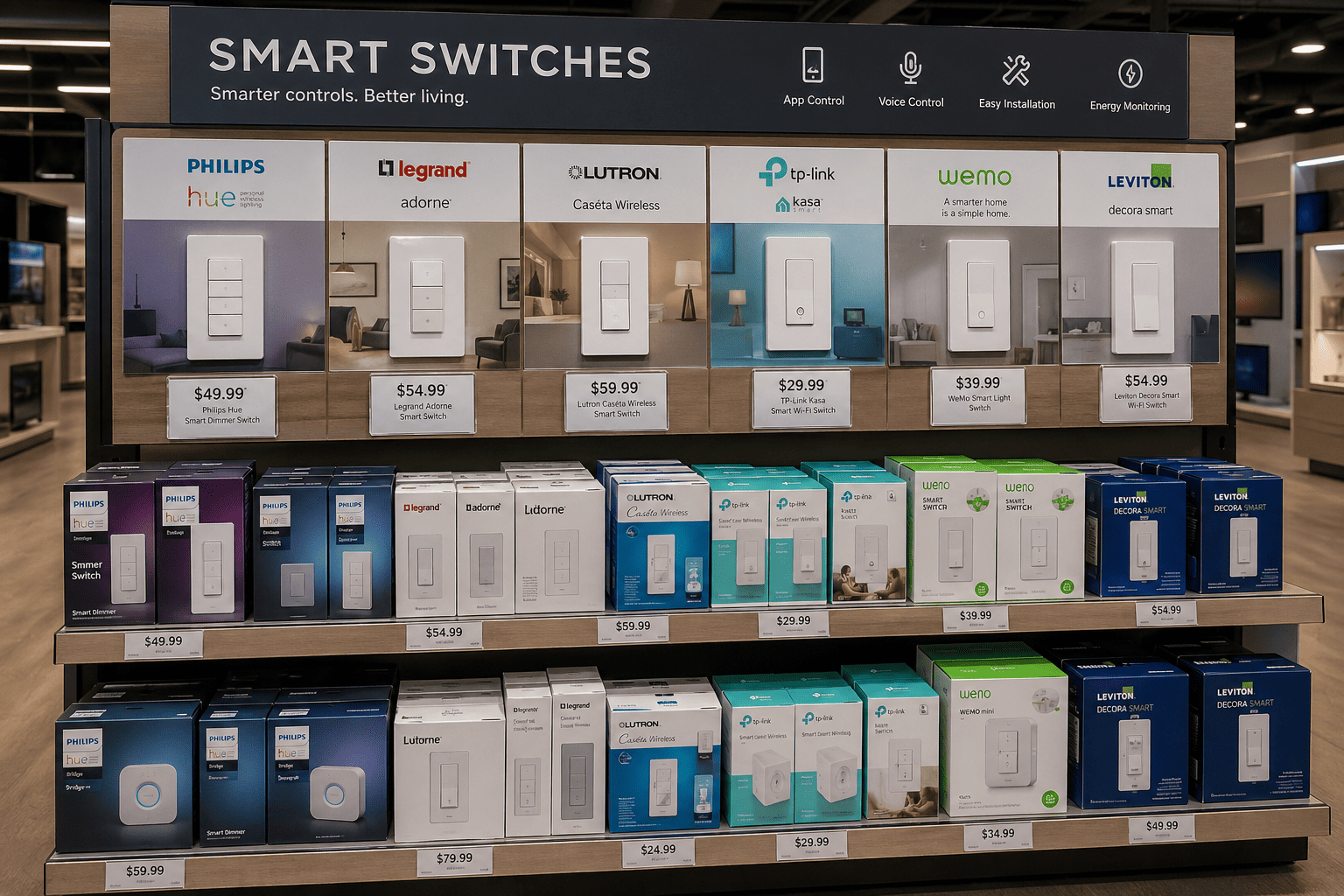
In my experience handling around $9 million in annual export orders, I've learned that a manufacturer's business model is key. Large, famous brands have a different goal than you do. Their entire infrastructure—from marketing to R&D to pricing—is designed to grow their own brand equity. They are your competitors, not your partners.3
Attempting to work with them on an OEM/ODM basis, if it's even possible, usually involves major roadblocks. You might face extremely high Minimum Order Quantities (MOQs)4, inflexible design options, and pricing that leaves no room for your own margin. They have little incentive to prioritize your project or provide the deep customization your market might demand. I remember a potential client from North America who spent months trying to negotiate a small custom run with a huge brand, only to be told it wasn't possible. He came to us, and we had samples for his custom design ready in weeks.
Here is a simple breakdown of the differences:
| Feature | Famous Consumer Brand | Specialized OEM/ODM Partner |
|---|---|---|
| Primary Goal | Grow their own brand | Grow your brand (as a partner) |
| Flexibility | Low; standardized products | High; built for customization |
| Pricing | High retail-focused pricing | Competitive manufacturing pricing |
| Partnership Focus | Low; they are the brand | High; their success is your success |
| Communication | Often slow and bureaucratic | Direct, fast, and project-focused |
How Do You Find a Top-Tier OEM/ODM Manufacturer?
You need a reliable manufacturer but don't know where to look. Finding a factory that balances world-class quality with fair pricing can feel like an impossible task.
Look for the hidden factories that manufacture for the big brands. These OEM/ODM specialists provide the same quality and reliability but with the flexibility, pricing, and partnership focus your brand needs to succeed in the market.
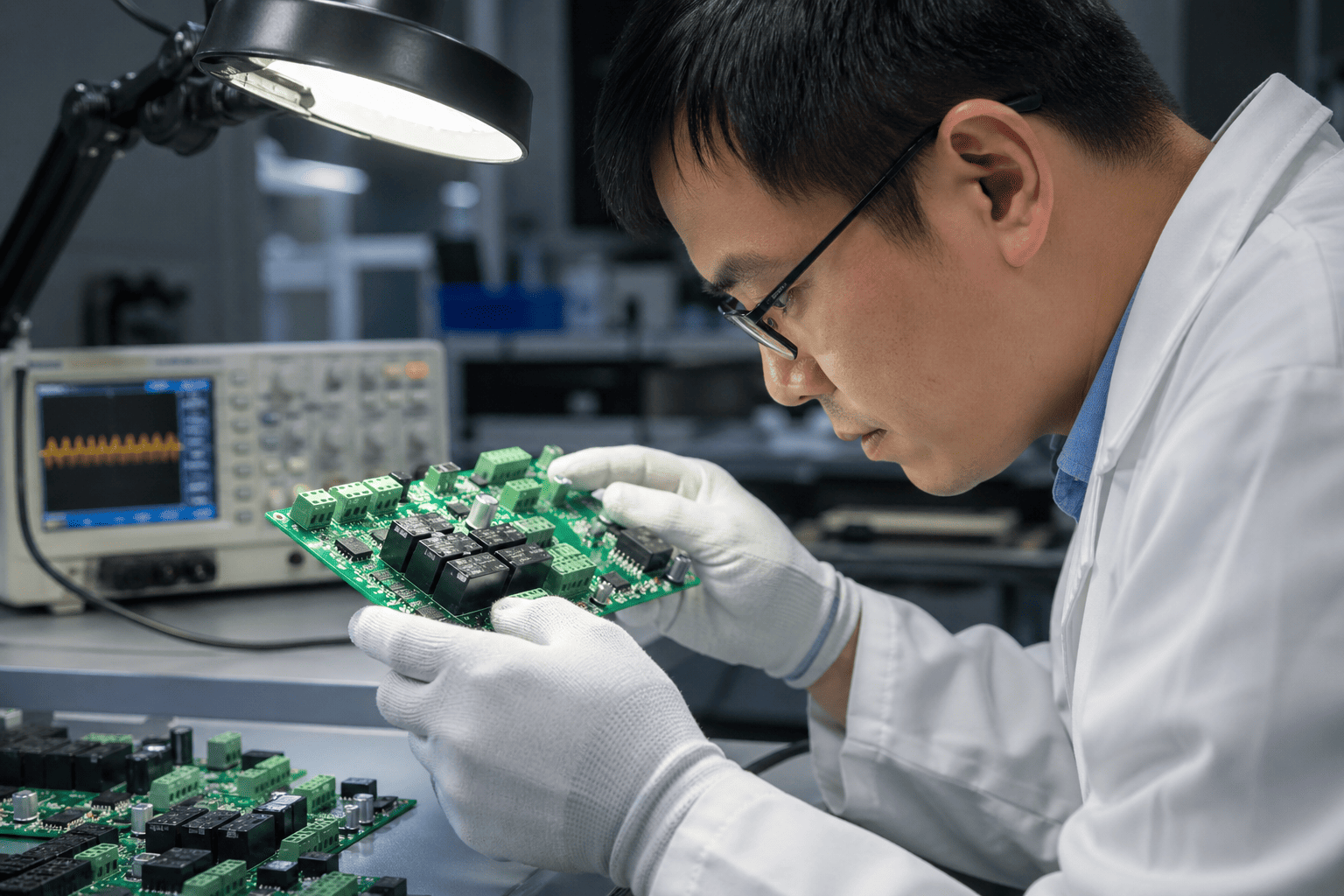
The smartest procurement managers I work with don't look for the brand name on the box; they look for the quality inside it. The secret is that many top-tier OEM/ODM manufacturers are the force behind some of the very brands you admire5. They have the same sophisticated production lines, strict quality control, and experienced engineers. The key difference is that their business is built around serving you, the brand owner.
Over my 12+ years in this industry, I've found that the best partners consistently excel in a few key areas. When you're vetting a potential manufacturer, don't just ask for a price list. You need to dig deeper to protect your investment and your brand's reputation. Look for a proven track record, not just claims. Ask for case studies or references from non-competing brands in other regions. A good partner will be proud to show you their success stories. Their quality control system should be transparent and robust.6 For example, at our facility, we have dedicated QC staff with over five years of experience on each of our 12 production lines. This ensures consistency from the first unit to the last.
Which Manufacturers Are Strong OEM/ODM Partners for 2026?
You're ready to find a real partner, not just a famous name. But who are the actual manufacturers you can trust with your brand's reputation and your budget?
Companies like ours, GOODTOP, and other specialized OEM/ODM manufacturers are strong choices. We are built to support brand owners with flexible production, deep export experience, and direct communication, offering a much better value proposition.
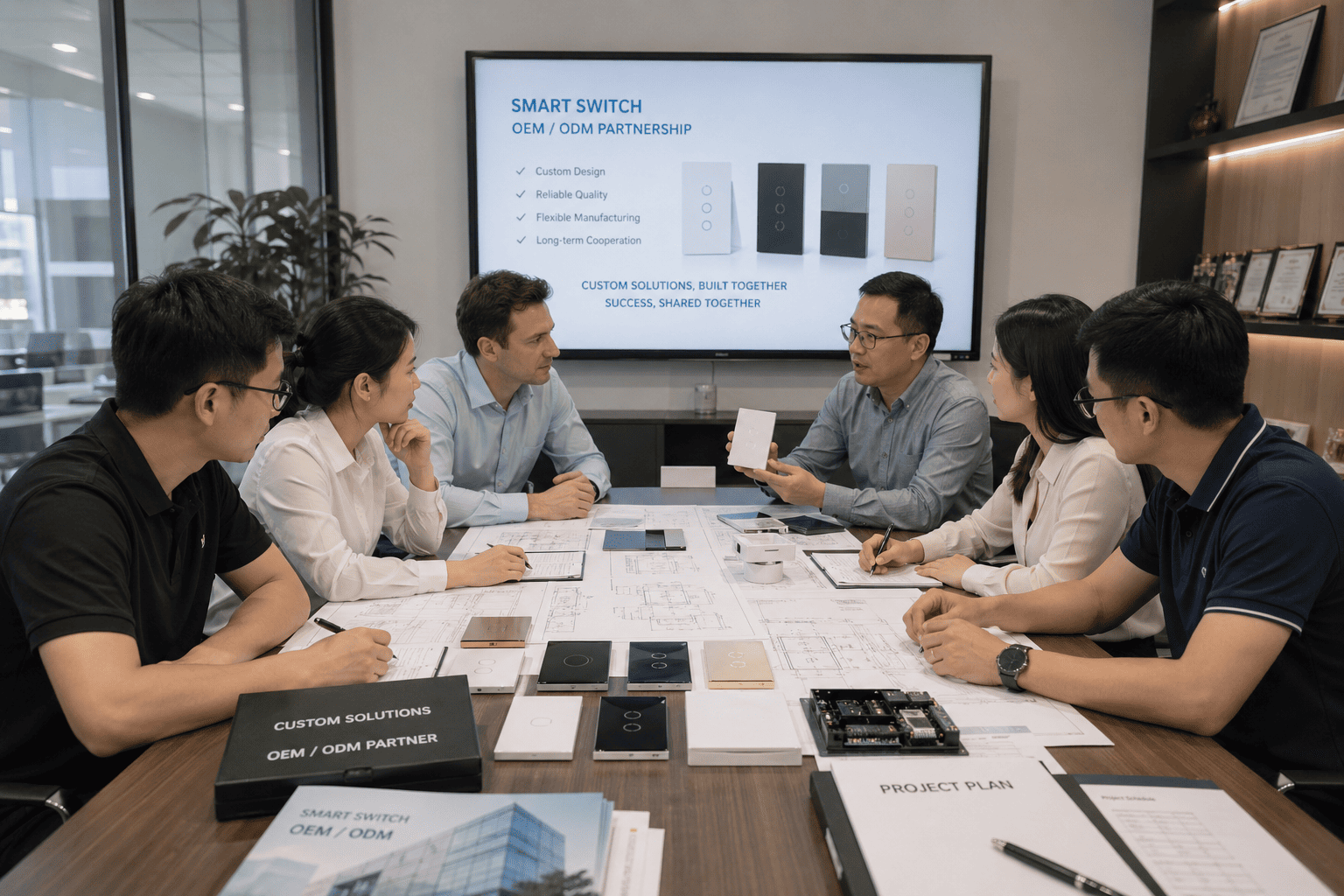
So, instead of a misleading list of 10 consumer brands, here is the "real" top list for a procurement manager. These are the types of manufacturers you should be looking for.
- The Full-Service OEM/ODM Specialist: This is our category. A company like GOODTOP exists to be a long-term partner. With over 12 years of dedicated OEM/ODM experience, we've built our entire operation around this model. We're not a consumer brand. We handle everything from custom mold design and firmware to unique packaging and logistics for clients across Europe, the Americas, and the Middle East. Our $9 million in annual exports is a testament to the trust our brand partners place in us. We act as an extension of your team.
- The Regional Certification Expert: Some factories are masters of a specific market. They have deep experience and existing certifications for either North America (UL, ETL7) or Europe (CE, RoHS8). Partnering with them can significantly speed up your time-to-market and reduce compliance headaches9.
- The Technology-Focused Innovator: These manufacturers are on the cutting edge of protocols like Matter, Zigbee, or Thread10. If your brand's unique selling proposition is advanced technology, partnering with one of these factories gives you access to specialized R&D without the massive overhead.
The remaining "top" spots are filled by other dedicated OEM/ODM players who, like us, focus on building your business instead of their own consumer-facing brand.
What Questions Should You Ask a Potential Manufacturing Partner?
You've found a potential manufacturer. How do you vet them properly? Asking the wrong questions can lead to costly mistakes, production delays, and a failed product launch.
Focus your questions on their OEM/ODM process, not just the unit price. Ask about their quality control system, their experience with your market's certifications, their project management workflow, and their process for handling customization.
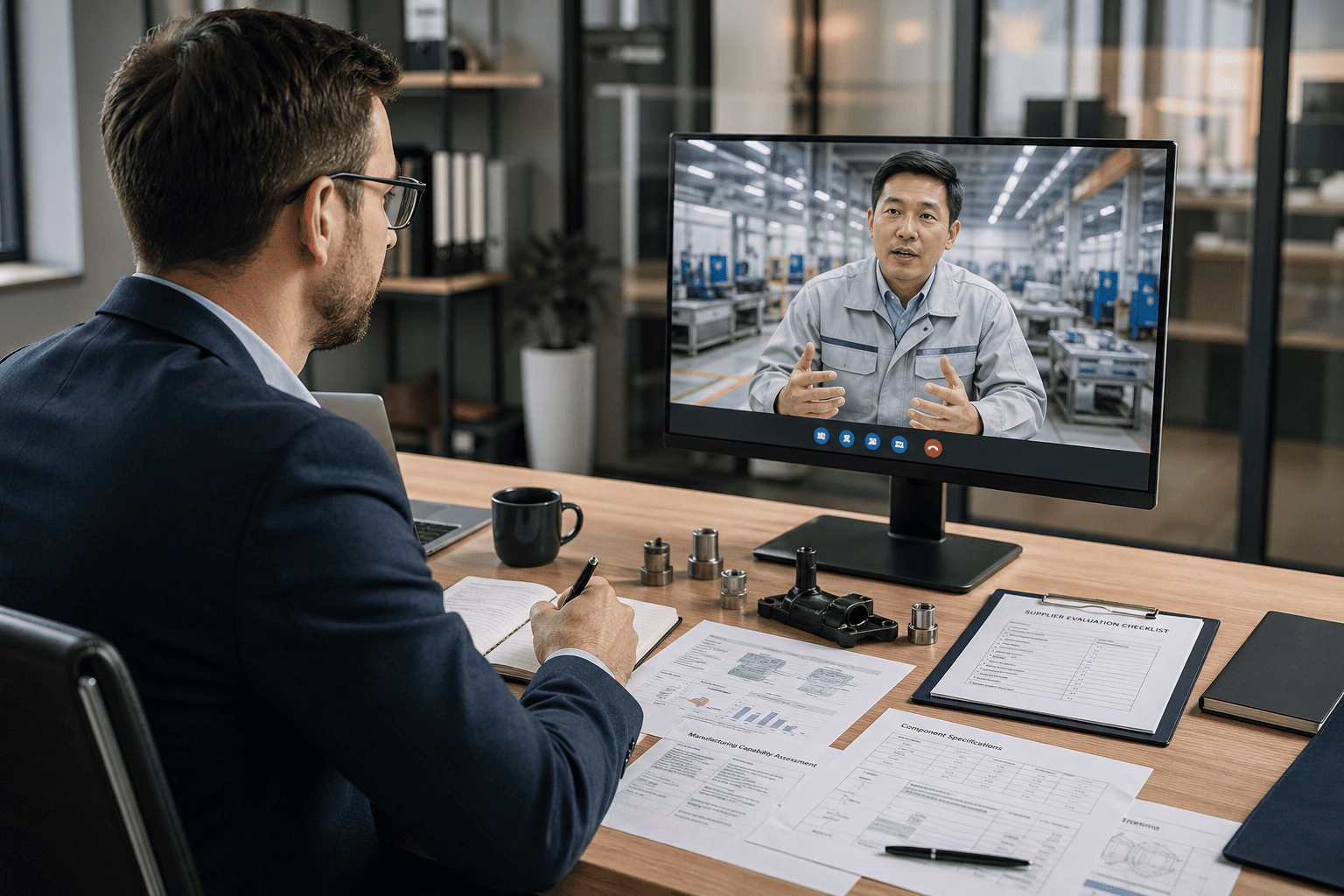
After countless conversations with brand owners, I've compiled a list of essential questions. A good partner will have confident, transparent answers to all of these. If they hesitate or give vague replies, it's a major red flag.
I always advise new partners to start the conversation with these topics:
- Project Management & Communication: "Who will be my single point of contact11? What is their experience with projects for my region? What is your standard response time for inquiries?"
- Customization Capability: "Can you show me examples of custom projects you've completed that are similar in scope? What is your process for developing a new mold or custom firmware?"
- Quality Control: "What is your inspection process for incoming raw materials? What is your end-of-line inspection and failure rate? Can I see a copy of a standard QC report?"
- Experience & Certification: "What percentage of your business is for my target market (e.g., North America, EU)? Can you provide documentation of your experience with UL, CE, or other required certifications?"
- Long-Term Partnership: "What is your process for new product development with a long-term partner? How do you handle intellectual property and design confidentiality12?"
Asking these questions shifts the conversation from a simple transaction to the beginning of a strategic partnership. It shows the manufacturer you are a serious, professional buyer, and it gives you the critical information you need to make the right choice.
Conclusion
The best smart switch manufacturer isn't the most famous brand. It's the dedicated OEM/ODM partner that fits your needs for quality, customization, communication, and long-term growth.
"Original equipment manufacturer - Wikipedia", https://en.wikipedia.org/wiki/Original_equipment_manufacturer. The source defines OEM and ODM production models as arrangements in which a firm manufactures, and in ODM cases may also design, products sold under another company’s brand; this supports the article’s distinction between branded consumer manufacturers and private-label manufacturing partners. Evidence role: definition; source type: encyclopedia. Supports: A specialized OEM/ODM partner is a distinct type of manufacturer suited to producing products for another company’s brand.. ↩
"Legrand - SEC.gov", https://www.sec.gov/Archives/edgar/data/935812/000104746903002441/a2101299z6-k.htm. Corporate reporting for major electrical-equipment companies documents substantial investment in branded product portfolios, distribution channels, and brand positioning, supporting the contextual claim that such firms primarily commercialize their own brands rather than private-label programs. Evidence role: historical_context; source type: other. Supports: Famous consumer brands generally prioritize their own branded product businesses.. Scope note: This supports the general business orientation of named consumer brands but does not prove that every large brand refuses OEM or ODM work. ↩
"Legrand (company) - Wikipedia", https://en.wikipedia.org/wiki/Legrand_(company). Market and company sources identify firms such as Legrand and Schneider Electric as suppliers of wiring devices, connected switches, and smart-home electrical products, which places them in the same product category as private-label smart-switch sellers. Evidence role: case_reference; source type: other. Supports: Large branded smart-switch manufacturers may compete directly with private-label brands in the same product category.. Scope note: The source can establish category overlap, but it cannot establish the commercial attitude or partnership willingness of every firm. ↩
"[PDF] Raw Material Minimum Order Quantity Optimization - DSpace@MIT", https://dspace.mit.edu/bitstream/handle/1721.1/121302/1240293813-MIT.pdf?sequence=1. Manufacturing and operations literature explains that minimum order quantities often arise from setup costs, batch production economics, and supplier capacity planning, giving contextual support to the claim that some suppliers may require large order commitments. Evidence role: mechanism; source type: paper. Supports: OEM/ODM negotiations can involve high minimum order quantities because of production economics.. Scope note: This explains why MOQs exist in manufacturing generally; it does not document the MOQ policies of any specific smart-switch brand. ↩
"OEM, EMS, CEM, ODM, CMO: What's the difference and why does it ...", https://www.escatec.com/blog/define-oem-ems-cem-odm. Industry overviews of electronics manufacturing services and original design manufacturing describe a model in which specialized manufacturers design or produce electronics for brand-owning firms, supporting the general claim that visible consumer brands may rely on less visible manufacturing partners. Evidence role: general_support; source type: research. Supports: Well-known electronics brands may rely on specialized OEM/ODM or EMS manufacturers behind the scenes.. Scope note: This supports the electronics industry model broadly and does not identify specific smart-switch brand-factory relationships. ↩
"[PDF] Guidance on the requirements for Documented Information of ISO ...", https://www.iso.org/iso/es/documented_information.pdf. ISO 9001 guidance describes documented quality-management processes, monitoring, inspection, corrective action, and continual improvement as elements of a formal quality system, supporting the article’s emphasis on transparent and robust supplier quality controls. Evidence role: expert_consensus; source type: institution. Supports: A manufacturing partner should have a documented and auditable quality-control system.. Scope note: ISO 9001 guidance establishes accepted quality-management principles but does not verify any individual factory’s implementation. ↩
"Types of products requiring NRTL approval - OSHA", http://www.osha.gov/nationally-recognized-testing-laboratory-program/products-requiring-approval. OSHA’s Nationally Recognized Testing Laboratory program lists UL and Intertek/ETL as recognized testing organizations for product safety certification in the United States, supporting the claim that these marks are relevant to North American electrical-product compliance. Evidence role: definition; source type: government. Supports: UL and ETL are relevant third-party safety certifications for products intended for the North American market.. Scope note: NRTL recognition concerns U.S. workplace safety testing and does not by itself cover every legal requirement for consumer smart switches. ↩
"RoHS - Wikipedia", https://en.wikipedia.org/wiki/RoHS. European Commission materials describe CE marking as a manufacturer’s declaration of conformity with applicable EU legislation and RoHS as a directive restricting hazardous substances in electrical and electronic equipment, supporting their relevance to products sold in the EU. Evidence role: definition; source type: government. Supports: CE marking and RoHS compliance are important for smart-switch products intended for the European market.. Scope note: The source explains EU compliance concepts generally; product-specific conformity depends on the exact device, standards, and market use. ↩
"Post-market evaluation of medical electrical equipment - PMC - NIH", https://pmc.ncbi.nlm.nih.gov/articles/PMC7529352/. Official conformity-assessment guidance emphasizes that products must meet applicable regulatory requirements and technical documentation obligations before being placed on the market, supporting the contextual claim that prior certification experience can reduce compliance friction during launch planning. Evidence role: mechanism; source type: government. Supports: A manufacturer experienced with target-market certification can help reduce regulatory delays and launch complexity.. Scope note: The source supports the mechanism of compliance burden but does not quantify time savings from choosing a certified or experienced factory. ↩
"Build With Matter | Smart Home Device Solution - CSA-IOT", https://csa-iot.org/all-solutions/matter/. Standards and technical references identify Matter as an application-layer smart-home interoperability standard, Zigbee as a low-power wireless mesh protocol, and Thread as an IPv6-based low-power mesh networking protocol, supporting their treatment as relevant smart-home technologies. Evidence role: definition; source type: institution. Supports: Matter, Zigbee, and Thread are recognized technologies used in smart-home device development.. Scope note: The source establishes the protocols’ roles but does not show that any particular factory has expertise in them. ↩
"[PDF] NASA Systems Engineering Handbook", https://www.nasa.gov/wp-content/uploads/2018/09/nasa_systems_engineering_handbook_0.pdf. Project-management guidance treats defined communication channels, role assignments, and responsibility ownership as core practices for coordinating complex projects, supporting the article’s advice to ask whether a supplier provides a single accountable contact. Evidence role: mechanism; source type: institution. Supports: A defined point of contact can improve communication and accountability in supplier projects.. Scope note: This supports project-management practice generally, not a measured outcome for smart-switch OEM projects specifically. ↩
"Trade Secrets - WIPO", https://www.wipo.int/en/web/trade-secrets. WIPO materials explain that trade secrets, confidentiality measures, and contractual controls are central to protecting commercially valuable technical information, supporting the article’s recommendation to ask suppliers how they handle IP and design confidentiality. Evidence role: expert_consensus; source type: institution. Supports: OEM/ODM buyers should evaluate how a manufacturing partner protects intellectual property and confidential design information.. Scope note: The source explains protection mechanisms generally; enforceability depends on jurisdiction, contract terms, and factual circumstances. ↩